If you're using Instagram to grow a brand, connect with customers, or build a community, your standard personal account is holding you back. The key to unlocking powerful analytics, advertising capabilities, and direct monetization tools is the Instagram Professional Account. This guide covers everything you need to know: from the core benefits and different account types to a step-by-step guide on making the switch and using its features to drive real results.
Instagram is no longer just a platform for sharing personal photos and memories; it has evolved into a powerful marketing tool for brands, businesses, and content creators. To maximize this potential, one of the first and most crucial steps is switching to an Instagram professional account. This account type unlocks access to analytics, advertising, and communication tools not available on a standard personal account, opening the door to strategic growth.
What Is an Instagram Professional Account?
An Instagram professional account is a specific account type designed for businesses, brands, and creators to monitor their performance, communicate more effectively with their audience, and achieve their commercial goals. Switching to this account is completely free and adds valuable capabilities to your profile.
Essentially, a professional account is a critical upgrade for anyone using Instagram as a business tool rather than a hobby. The data provided allows you to understand who your followers are and what content performs best, enabling you to shape your marketing strategy based on concrete evidence.
All of these features are managed from a central command center on your profile called the "Professional Dashboard". This dashboard provides at-a-glance performance tracking, quick access to your business growth tools, and curated educational resources directly from Instagram. Think of the Professional Dashboard as your mission control for succeeding on the platform; learning to use it effectively is essential.
Why Should You Switch to an Instagram Professional Account? Key Advantages
Switching from a personal to a professional account is much more than a minor settings change. Here are the fundamental advantages this transition provides:
- Advanced Analytics and Insights: The greatest strength of a professional account is the "Insights" panel. Here, you can access detailed data on your followers' demographics (age, gender, location), the days and times they are most active, your post reach, and engagement rates. This data is vital for building an effective digital marketing strategy.
- Promotions and Advertising Options: Only professional accounts can boost posts or create detailed ad campaigns to reach a wider audience. The ability to run targeted Instagram advertising is invaluable for increasing brand awareness and generating leads.
- Contact Buttons and Business Information: You can add direct call-to-action buttons to your profile, such as "Email," "Call," or "Directions." This makes it easy for customers to contact you and simplifies access to your location if you have a physical business.
- Instagram Shopping Features: For e-commerce businesses, professional accounts offer the ability to tag products in posts and stories. This feature allows users to discover products and navigate to a purchase page directly from Instagram.
- Quick Replies: You can create saved template responses for frequently asked questions from customers. This feature saves you time and helps standardize your customer communications.
- Branded Content Tools: Developed especially for influencers and brands, these tools help manage sponsored collaborations transparently. This is a key feature for anyone who fits the description of what is a content creator.
- Collaboration and Engagement Tools: Professional accounts can use the "Collabs" feature to co-author a post or Reel with another account. When you do this, the content appears on both profiles and shares the engagement (likes and comments), allowing you to organically tap into another account's audience and double your reach. This is an incredibly powerful tool for brand partnerships and influencer marketing campaigns.
Types of Instagram Professional Accounts: Business vs. Creator
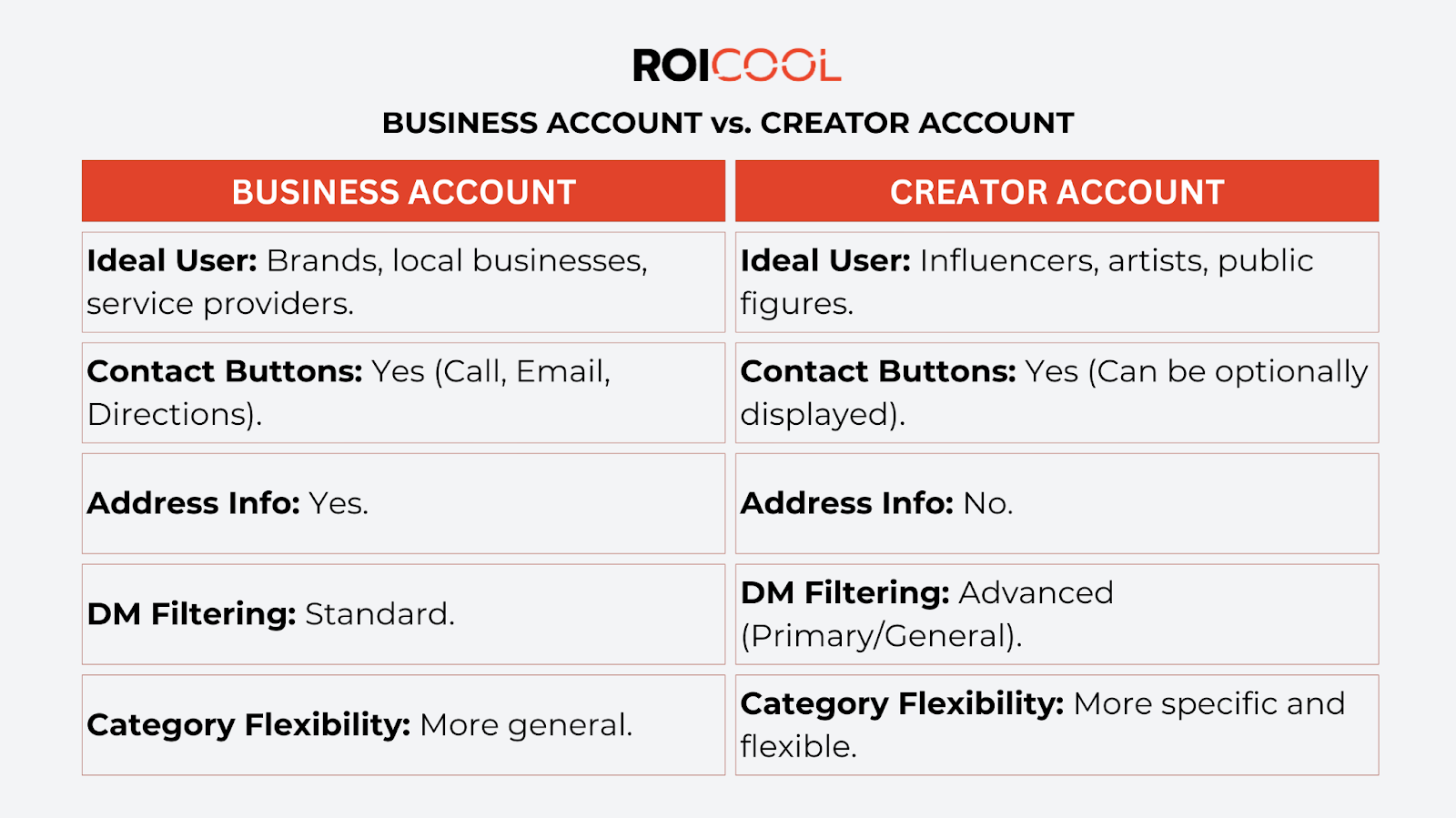
When you switch to a professional account, Instagram offers two options: Business and Creator. While both share similar core features, there are important differences based on their intended use.
Who Is the Business Account For?
The Business account is ideal for brands that sell products, local shops, restaurants, service providers, and companies with a corporate identity.
- Key Features: Its main advantage is the ability to display a physical address and detailed contact information. The category labels are more general and commercially focused (e.g., Restaurant, Clothing Brand, Health/Beauty).
Who Is the Creator Account For?
The Creator account is better suited for influencers, artists, public figures, photographers, and professionals building a personal brand.
- Key Features: It offers more flexibility in displaying or hiding the category label and contact information. The category options are more specific (e.g., Blogger, Gamer, Digital Creator). It also provides a two-tab inbox ("Primary" and "General") to manage direct messages more efficiently.
Before You Switch: What Changes on Your Account
The switch itself takes about two minutes, but a few things change the moment you confirm it. It is worth knowing them before you tap the button rather than after.
- A private account becomes public. Professional accounts cannot be private. Instagram states in its Help Center that if your personal account is private, switching to a professional account will make it public, and that all pending follow requests are automatically accepted when you go public. There is no undo for this, so clear out any follow requests you would rather not approve before you switch. If you need the account to stay private, switching back to a personal account is the only route.
- Your category label and contact details are visible only if you want them to be. The switch adds a category label and public business information to your profile, but you can hide either of them. On mobile, go to Edit profile, then Profile display under Public business information, and choose what to show.
- A Facebook Page is not required. Instagram describes connecting a Page as an optional step that you can skip during setup and add later. It makes sharing to Facebook and connected experiences such as ads and shopping tools easier, but it is not a condition of having a professional account.
Everything else stays where it is. Your username, posts, followers, archive and message history are untouched, and the switch is free.
How to Switch to an Instagram Professional Account (Step-by-Step Guide)
Converting your existing personal account to a professional one is very simple. You can complete the process in just a few minutes by following these steps:
- Go to Your Profile and Open Settings: Open the Instagram app and tap your profile picture in the bottom-right corner. Then tap the menu icon in the top right to open "Settings and activity," and scroll down to the "For professionals" heading.
- Select 'Account Type and Tools': In the settings menu, scroll down and tap on the "Account type and tools" section.
- Tap 'Switch to Professional Account': On the next screen, you will see the "Switch to professional account" option. Tap it to begin the process.
- Choose a Category: Instagram will show you a few screens explaining the benefits. After continuing, you will be asked to select a category that best describes you or your business (e.g., Blogger, Beauty, Personal Coach). You can choose to display or hide this category on your profile.
- Select Your Account Type: Next, you will be asked if you are a "Creator" or a "Business." Choose the one that best suits you based on our descriptions above.
- Complete Your Contact Info and Profile Settings: Finally, review the public contact information you want to display (email, phone number). You will also be offered the option to connect your account to a Facebook Page, which we recommend if you plan to run ads or handle messages from Meta Business Suite. This connection is now managed through Meta's Accounts Center rather than inside Instagram's own settings, so if you skip it during setup you can add it later from Accounts Center or from the Page itself.
Once these steps are complete, your account will instantly be converted, and you will gain access to new features like "Insights."


How to Switch on Desktop (instagram.com)
The desktop flow reaches the same result, but the menu labels and the order of the steps are not identical to the app. On instagram.com you pick your account type first and your category second, and you have to confirm the switch on a separate screen. Here is the full sequence:
- Click More in the left-hand sidebar, then select Settings.
- Under For professionals, select Account type and tools.
- Click Switch to professional account.
- Choose Creator or Business, then click Next.
- Select the category that best describes what you do. The category does not decide whether you end up with a Business or a Creator account; that was the choice you made in the previous step.
- Click Done, then click Continue to confirm that you want to switch to a professional account.
- Add your business contact details and click Save, or select Don't use my contact info to skip it. Click Done to return to your profile.
To change what appears on your public profile later, click More, then Settings, then Professional account in the left-hand menu. From there you can tick or untick Display category label and Display contact info, then click Submit.
One practical note: the Facebook Page connection is not offered inside this desktop flow the way it is in the app. If you want a Page connected, handle it separately after the switch.
Next Steps After Setting Up Your Professional Account
Switching is just the first step. To make the most of these tools, you need to optimize your profile:
- Optimize Your Bio: Your bio is the first thing a visitor sees. Clearly state who you are, what you do, and the value you offer.
- Complete Your Contact Information: Ensure your email, phone, and address (if applicable) are filled out correctly so customers can reach you.
- Regularly Track Your Insights: Check your analytics weekly to understand which content gets the most engagement and when your followers are active. This data will help shape your future content strategy and is a core part of any performance marketing approach.
- Shape Your Content Strategy with Data: Your analytics might reveal that your audience loves video content more than informational graphics. Update your content plan based on this data to increase engagement.
How to Switch Back to a Personal Account (and What You Lose)
Instagram lets you move between account types whenever you like, with no waiting period and no cap on how often you do it. That makes the switch a reversible experiment rather than a one-way door, which is worth knowing before you commit.
In the Instagram app
- Tap your profile picture in the bottom right to go to your profile.
- Tap Menu in the top right. Depending on your app version you may also need to tap Settings.
- Tap Account type and tools, then tap Account type.
- Tap Switch account type.
- Tap Switch to personal account, then tap Switch to personal to confirm.
On instagram.com
Click More, then Settings. Select Creator tools and controls if you have a creator account or Business tools and controls if you have a business account, click Switch account type, choose the account type you want and click Switch. The same menu is how you move between Business and Creator without going back to personal.
What you actually lose
- Access to ads ends. Boosting posts and running campaigns are professional-account features.
- You lose access to Meta business tools such as Meta Business Suite and Meta Ads Manager.
- Any Facebook Page connected to your professional account is disconnected.
- You may lose access to select tools, with shopping tags and monetisation features first in line.
What you keep is more than most guides admit. Your posts, followers, archive and message threads are not deleted, and Instagram notes that if your account stays public after the switch you still have access to your dashboard and insights. Make the account private as well, and that access closes too.
One caveat worth planning around: Instagram insights only look back over the past 90 days. If you report on longer trends, export or record what matters before you change account type.
Effectively Using the Professional Dashboard
Make it a habit to regularly visit your Professional Dashboard. It centralizes your most important tools into three sections:
- Track Your Performance: This gives you a snapshot of your key metrics over the last 30 days, including accounts reached and engaged accounts. Tap "See All" to dive deep into your Insights for a full analysis.
- Grow Your Business: This section contains shortcuts to all your commercial tools, such as Ads, Branded Content, Instagram Shopping, and Subscriptions. As you unlock more features, they will appear here.
- Stay Informed: Here, Instagram provides curated tips, best practices, and inspiration from its official business and creator resources. It's a great way to stay updated on new features and strategies. For more official guidance, you can always visit the Instagram Help Center.
Understanding and Interpreting Advanced Metrics
Go beyond surface-level numbers in your Insights panel to find actionable data:
- Views vs. Reach: Instagram retired Impressions and Plays on 21 April 2025 and made Views the single distribution metric across posts, Reels and Stories - Views counts how many times your content was played or displayed, including repeat views from the same person. Reach is still the number of unique accounts that saw the content, and it remains the more useful figure for measuring brand awareness. (If you see "Impressions" in an older report or a third-party tool, read it as the predecessor of today's Views; the two are not calculated identically.)
- Engagement Rate Beyond Likes: Pay close attention to Saves and Shares. A "Save" indicates that your content is valuable enough for a user to want to return to it later. A "Share" is even more powerful, as it means a user is actively acting as a brand ambassador for you.
- Reels Retention Rate: For Reels, look at the Audience Retention graph. This shows you exactly when viewers drop off. If you see a big dip in the first 3 seconds, your hook needs work. Analyzing this helps you create videos that people watch all the way through.
How to Monetize Your Instagram with a Professional Account
A professional account provides powerful tools designed not just for analytics, but also for creating a direct revenue stream. When you combine these features with the right strategies, your profile can transform from a hobby into a profitable business model.
1. Instagram Shopping for E-commerce:
If you sell physical products, the Instagram Shopping feature is invaluable. It allows you to tag your products directly in your posts and stories. Users can tap on a product they like to see the price and click through to your website to complete the purchase. The "View Shop" button on your profile acts as a digital storefront, turning Instagram into an effective sales channel.
2. Sponsored Content and Branded Content Tools
For creators and influencers, the most common revenue model is sponsored content. A professional account allows you to manage these collaborations more professionally using Branded Content Tools. You can use the "Paid partnership with..." label on your post, which builds trust with your audience and allows the brand partner to see the post's performance statistics.
3. Affiliate Marketing and the Bio Link
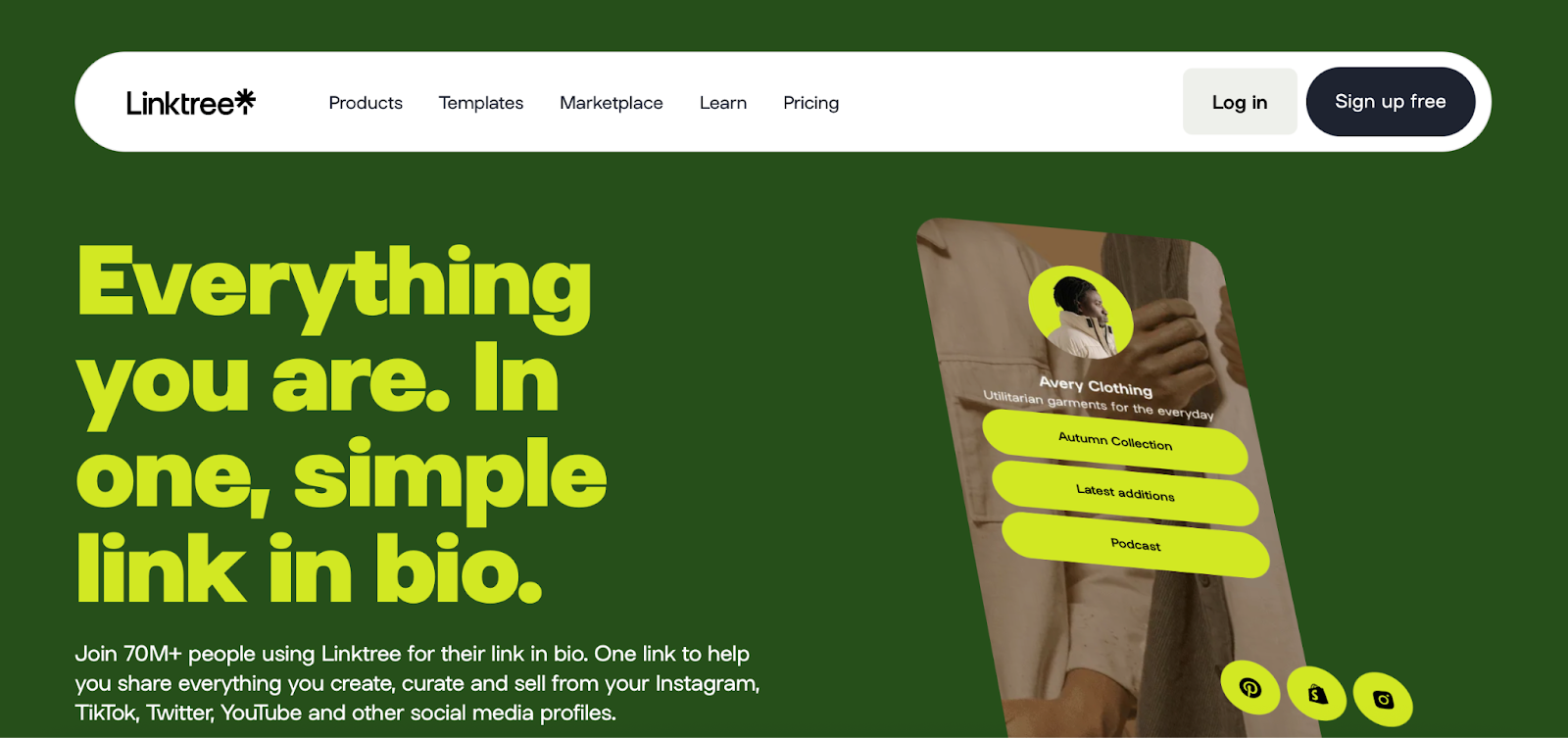
The professional account allows you to add a clickable website link in your bio, which is your most valuable real estate for affiliate marketing. By promoting other brands' products, you can earn a commission for every sale that comes through your unique link. Instagram now lets you add up to five links to your profile — the limit was a single link until 2023 — so most accounts no longer need a workaround at all. If you need more than five destinations, or you want click-level tracking on each one, tools like Linktree can host a longer list of affiliate links and show you which destinations actually get clicked, all from one central hub.
4. Create a Recurring Revenue Stream with Instagram Subscriptions
Available to creators who meet certain eligibility criteria (typically 10,000+ followers), Subscriptions allow you to earn a recurring monthly income by offering exclusive content to your most loyal followers. For a monthly fee you set, you can provide subscribers with:
- Subscriber-Only Content: Exclusive Posts, Stories, Reels, and Live videos.
- Subscriber Badges: A special purple badge that appears next to their name in comments and DMs, making them stand out.
- Exclusive Channels: Access to subscriber-only broadcast or social channels for more direct communication.
This feature is excellent for building a strong community and creating a predictable revenue stream.
5. Earn Instantly with Live Badges and Gifts
During Instagram Live broadcasts, viewers can show their support by purchasing "Badges," which appear as hearts next to their comments. This not only provides you with direct revenue but also helps you identify your top supporters. Similarly, Instagram now allows users to send virtual "Gifts" on your Reels, which can be converted into money. These micro-transactions are a great way to monetize your content in real-time.
When You Should Not Switch to a Professional Account
Most guides on this topic are published by Meta or by tools that sell scheduling software, so the answer is always yes. We are neither, so here is the honest version. There are four situations where we would tell a client to wait.
- The account needs to stay private. This is the clearest case. A professional account cannot be private, and switching converts a private account to public while auto-accepting every pending follow request. If your audience is friends and family, or the account is deliberately closed, the switch costs you something you cannot get back without reverting.
- Analytics is your only reason. Instagram now offers free insights to public accounts generally, not just professional ones. The professional upgrade still gives you the dashboard, ads and monetisation tooling around that data, but if you only wanted to see how a post performed, the gap is narrower than it was a few years ago.
- You are too small for the data to mean anything yet. Instagram only shows follower trends once you have at least 100 followers, and audience demographics only appear once you have reached or engaged more than 100 accounts in the selected time frame. Below that threshold the panel will be mostly empty, so switching buys you a dashboard you cannot read yet. Publish first, switch when there is something to measure.
- You are about to split one working account into two. A personal brand that already has an audience rarely benefits from starting a separate professional profile from zero. Converting the account you already have keeps the followers and the history; opening a second one means running two content calendars with the same amount of time.
Our rule of thumb is simple: switch when you intend to spend money on the account or earn money from it. If neither is true in the next three months, a public personal account is doing the job.
Conclusion
A professional account is the right call for most people using Instagram to build a business or a personal brand: it is free, it is reversible, and it replaces guesswork with data you can act on. It is not the right call for everyone. If the account needs to stay private, if you have not published enough yet for the numbers to mean anything, or if you have no plan to spend money on the account or earn money from it, a public personal account will do the job for now. Weigh the four situations above against what you actually want from the platform, and switch when the tools answer a question you are already asking.