As you walk down the road, imagine a giant ice cream that suddenly comes across you, or an advertisement that turns a bus stop into an oven. This is not an ordinary bulletin board, but an experience designed to be etched into your mind. That's exactly what guerrilla marketing is: a surprising and memorable strategy that catches the consumer's attention with big ideas instead of big budgets. Breaking the rules of traditional advertising, this creative art of warfare can make your brand speakable in an instant.
What Is Guerrilla Marketing?
Guerrilla marketing in its most basic definition is a strategy that breaks the patterns of traditional marketing methods and aims for maximum impact by creating a shock effect on the target audience through unexpected and creative tactics. The concept was first coined in 1984 by marketer Jay Conrad Levinson. Levinson's basic philosophy was simple: invest big ideas, time and energy instead of big advertising budgets.
At the heart of this approach lies the principle of “low cost, high impact”. Unlike traditional marketing, instead of “interrupting” the target audience with millions of pounds of media spending, guerrilla marketing aims to “captivate” them with a cleverly constructed experience. Therefore, especially low-budget marketing It is an invaluable weapon for small and medium-sized businesses looking for solutions. He gets his energy not from money, but from creativity.
Guerrilla marketing is an umbrella concept rather than a single method, and underlies many different approaches. A successful campaign, easily spreading from ear to ear viral marketing can achieve the effect. Among the best known applications of this strategy are the following:
- Street Marketing: Creative placements and interactive activities carried out in public spaces where the public is busy.
- Ambush Marketing: The tactic of creating brand awareness by capitalizing on the popularity of the event without an official sponsor of a major event (for example, the Olympics or a concert).
- Ambient Marketing: Giving surprising messages using everyday objects or environments (bus stop, pedestrian crossing, parking bench, etc.) as advertising medium.
Ultimately, the goal will be placed, talked about and shared in people's minds, transcending advertising noise creative marketing ideas is to produce.
Basic Principles of Guerrilla Marketing
There are some basic principles that distinguish guerrilla marketing from other strategies and determine its success. These principles form the spirit of the campaign and show how huge impacts can be created without large budgets:
- Creativity: Guerrilla marketing is more fuel than money, cleverly constructed creative marketing ideasis. The goal is to transform an ordinary object or place into an unforgettable experience that carries the brand's message.
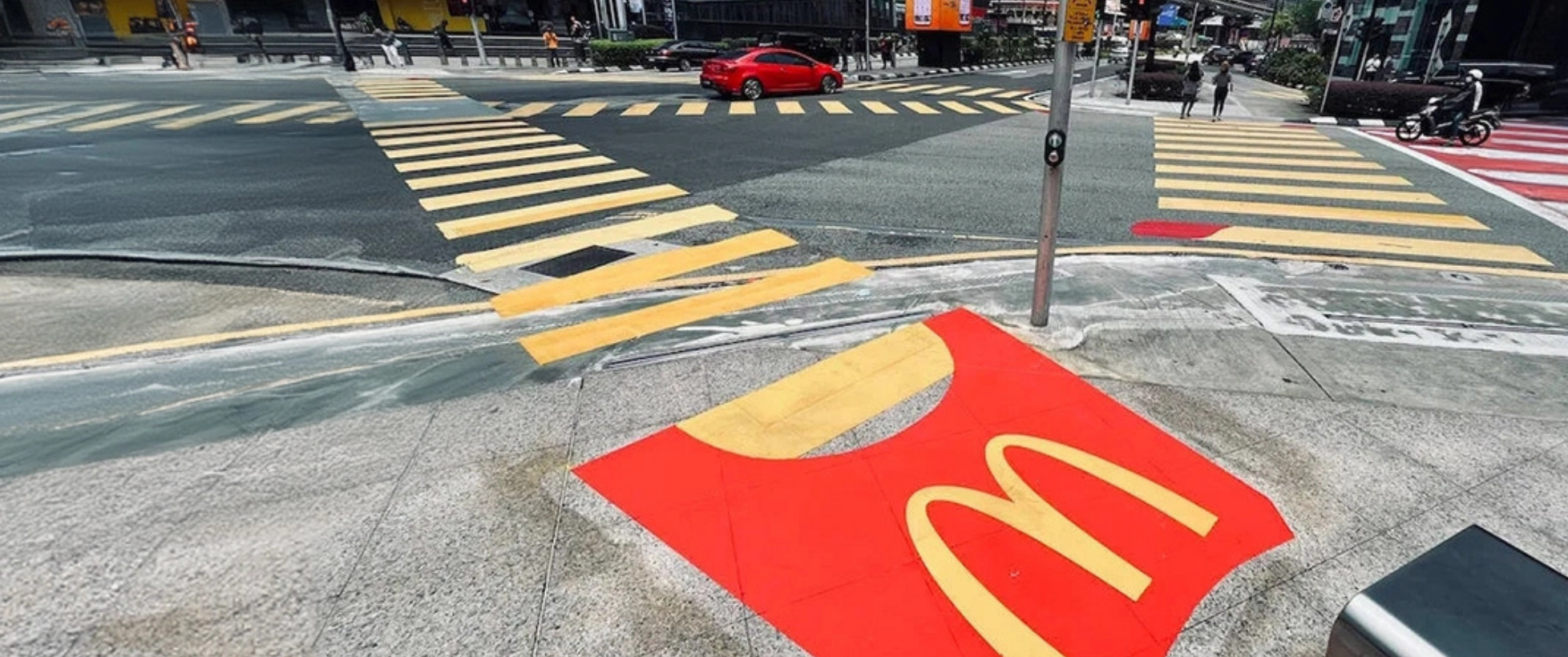
- Surprise Effect: It aims to attract attention by disrupting the daily routine of the consumer. For example, turning a bus stop into a giant oven or painting a pedestrian walkway like french fries, a typical street marketing is a tactic and, as it is unexpected, begins to be talked about instantly.
- Low Budget: This strategy, by its very nature low-budget marketing It is based on the principle. Instead of large media purchases, human resources, time and, most importantly, imagination are invested, thus maximizing return on investment (ROI).
- Interaction: The campaign encourages the viewer to move away from being a passive buyer and become part of the experience. Interactive placements where people take photos and share on social media, talk about, contribute to the organic spread of the campaign and viral marketing It allows him to carry the potential.
- Psychological Triggers: Guerrilla campaigns often mobilize basic human emotions such as curiosity, humor, shock, or urgency. Sometimes this is a clever one that plays a role from the effectiveness of a competing brand Ambush Marketing by making a move, an unexpected connection is established in the mind of the consumer.
Differences Between Traditional Marketing and Guerrilla Marketing
The basic philosophy, tools and playing field of traditional marketing and guerrilla marketing are completely different from each other. One buys attention based on financial strength, while the other draws attention based on mental and creative power. Understanding the key distinctions between these two approaches is why guerrilla marketing is so effective low-budget marketing It makes it clearer that there is an alternative.
The following table summarizes the contrasts between the two marketing worlds:
| Comparison Criteria | Traditional Marketing | Guerrilla Marketing |
|---|---|---|
| Budget | High, requires significant investment. | Low, requires time, energy, and imagination. |
| Reach/Scope | Mass audiences (TV, radio, print). | Niche, targeted, often local. |
| Method | Interruptive, one-way communication. | Immersive, interactive, unexpected experiences. |
| Message | Direct, sales-focused ("Buy now!"). | Indirect, curiosity-driven, emotional connection. |
| Risk | Financial risk (High spend may not yield ROI). | Reputation risk (Campaign may be misunderstood or backfire). |
| Measurement | Traditional metrics (Reach, Frequency, GRP). | "Buzz", social media shares, PR value. |
As can be seen from this table, if traditional marketing is a monologue, guerrilla marketing is an art of starting a dialogue. For example, putting a billboard at a bus stop is a traditional approach. But designing the bench of that bus stop like a KitKat chocolate is something that surprises people, encourages them to take a photo and share it. street marketing is an example.
This creative mindset, sometimes Ambush Marketing It can also evolve into more competitive tactics. In this method, a brand steals a share of its competitor's investment by cleverly associating itself with a major event (e.g., the Olympics) despite not being an official sponsor. The ultimate goal is always the same: Unforgettable creative marketing ideas By producing, spreading by ear and through social media, it has a high potential viral marketing to create an effect.
Types and Methods of Guerrilla Marketing
Guerrilla marketing does not fit into a single mold; in different environments, it is divided into many sub-branches aimed at different goals. These methods are designed to get the brand's message and identity in front of the target audience at the most unexpected moments. Here are the most common types of guerrilla marketing:
It is the best known guerrilla tactic. It involves the direct and surprising interaction of the brand with consumers in public spaces (streets, parks, squares). The goal is to get people's attention by disrupting their daily routines. These types of campaigns are usually creative marketing ideas With it turns ordinary urban objects into billboards.
- Example: Folgers Coffee's creation of the illusion of “smoke-smoking coffee” by placing a giant coffee cup sticker on the steam from the manholes in New York City is a classic street marketing is an example.
It is similar to street marketing but more subtle. Advertising conveys the message by making it a natural part of the environment. An object or surface that the consumer does not expect turns into an advertising medium. Areas such as bus handles, parking benches, stair steps are used.
- Example: The fact that the IWC watch brand wears clock-shaped designs on the handles on airport shuttle buses. When passengers grasp the handle, an image is formed, as if there is an IWC watch on its arm.
Without an official sponsor of an event (usually large sporting organizations or concerts), it is a strategy to associate oneself with that event. It aims to play a role in a field sponsored by the rival brand, with a more clever and remarkable move. This is a very effective low-budget marketing It could be tactics.
- Example: While Adidas was the official sponsor of the 2012 London Olympics, Nike's “Find Your Greatness” campaign launched ads showing amateur athletes in towns named “London” around the world, it was brilliant. ambush marketing It was his move.
It is a guerrilla tactic of the digital world. The goal is to produce content (video, visual, text) that is so engaging, funny or surprising that people share it on social networks of their own volition, allowing the message to spread organically. The brand does not spend money on distribution; the audience becomes the carrier of the message.
- Example: Blendtec blender brand “Will It Blend?” video series. The brand showed the power of its product in witty language by throwing and shredding everything from iPhones to golf balls into a blender, and the videos have been shared by millions of people.
Ambient Marketing
Media marketing is the art of turning ordinary objects and public spaces around us into a billboard. The goal here is to surprise and create a momentary pause by making advertising part of their daily routine at a moment when the consumer does not expect it. For example, the design of a bench like KitKat chocolate or the transformation of a pedestrian walkway into McDonald's fries are among the best known examples of this type. This creative marketing ideas, usually much more than traditional advertising low-budget marketing offers solutions. This approach, street marketingof, and sometimes Ambush Marketing It's one of the most effective arms of their tactics, because people tend to photograph these clever apps and share them on social media. This is the campaign organically. viral marketing It enables him to achieve success.
Ambush Marketing
It is the art of grabbing a share of the huge interest generated by a major event (Olympics, World Cup, etc.) without official sponsors. In this strategy, the brand aims to establish a link between the event and itself in the mind of the consumer by running its own remarkable campaign in the immediate vicinity of the event or in the same time period. Although Nike is the official sponsor of the 2012 London Olympics, Adidas has captured the spirit of the event with advertisements it shoots in different places around the world with the name “London”, Ambush Marketing It is a lesson for.
This method, without paying huge sponsorship costs, completely creative marketing ideas It aims to create an agenda with the power of low-budget marketing It is wonderful. The goal is to draw attention upon itself by wasting the investment of the official sponsor. A successful ambush, usually viral marketing It can be talked about even more than official sponsors by creating an impact.
Street Marketing
which brings me together in some way street marketingis. This method aims to turn an ordinary day into an unforgettable experience, using urban texture like a canvas. The brand's message is unexpectedly integrated into a bus stop, a pedestrian crossing or a park bench.
The goal is to give them a little surprise by disrupting people's daily routines.
- Artistic installations
- Surprise product deployments
- Organized events such as flash mobs
For example, the fact that Mr. Proper places his logo on one of the strips of a pedestrian crossing, making it “immaculate”, is an ingenious idea that describes the promise of the product in a single frame. The real power here is that instead of thousands of pounds spent on billboards, people will want to take and share their photo creative marketing ideasIt comes from. A successful street marketing campaign, organically viral marketing carries potential, which makes it the most effective low-budget marketing It does one of the tools.
Experiential Marketing
It is an approach that takes the consumer away from being a passive viewer and places it in the lead role of the brand's story. The goal is not to describe the product or service, but to make it feel and live it. An interactive installation that a brand suddenly sets up in a square, a pop-up store designed for a special product launch, or events that make consumers part of a game are the best examples of this genre.
The main strength here is the desire for the authentic experience created to be shared by participants on social media. In this way, an activity that reaches a physically limited number of people, a digital world viral marketing It can turn into success. This method, street marketing It is often intertwined with and does not require large budgets, completely based on intelligence creative marketing ideas built with low-budget marketing It also allows for campaigns. It creates an unforgettable memory and a strong emotional bond between the brand and the consumer.
Advantages and Risks of Guerrilla Marketing
Although it carries great potential for impact, guerrilla marketing is like a knife with two sharp edges. While a creative idea can take your brand to the top, a poorly planned campaign can have the opposite effect. Therefore, it is necessary to carefully weigh the pros and cons of the strategy.
- Low Cost and High ROI: The most attractive aspect of guerrilla marketing is that it is much more cost-effective compared to traditional media purchases. The investment is not made in money, but in time, energy and creativity. A successful campaign can generate a return (ROI) that millions of pounds of advertising cannot provide on a small budget. This makes it an ideal low-budget marketing makes the solution.
- High Viral Potential: Surprising, witty or thought-provoking creative marketing ideasbrings out a natural invitation for people to take a photo and share it on social media. A street marketing its application can spread organically, reaching a global audience in a short time. This is a powerful factor that multiplies the impact of the campaign. viral marketing It acts as the engine.
- Strong Reminiscence: People are exposed to hundreds of ads every day and ignore most of them. Guerrilla marketing, on the other hand, pierces this advertising noise. A clever campaign that comes across at an unexpected moment leaves a deep mark on the mind of the consumer and allows them to establish an emotional connection between them and the brand.
- Misunderstanding and Negative Reaction: The line between creativity and annoyance is pretty thin. A campaign that ignores the value judgments or sensitivities of the target audience can garner anger rather than sympathy for the brand. Misinterpretation of the message, on social media can develop into a rapidly growing crisis.
- Legal and Administrative Barriers: Unauthorized use of public spaces, interference with private property or at regulated events Ambush Marketing activity can lead to legal problems and fines. It is critical to carefully research the rules and legal boundaries of local governments before launching the campaign.
- Brand Image Risk: A guerrilla tactic that is poorly implemented or looks “cheap” can damage the professional image of the brand. The quality of the campaign is kept equivalent to the quality of the brand. The goal is to appear intelligent and creative; not desperate or amateurish. Therefore, each idea must be fully compatible with the brand identity.
Unforgettable Guerrilla Marketing Examples
Theory tells us what strategy is, but true inspiration is hidden in the moments when that strategy comes to life. Here are some mind-blowing campaigns from both the world and Turkey that prove the power of guerrilla marketing.
Before the horror film “IT” was released, mysterious red balloons began to appear on the streets of Sydney, Australia. This single balloon, attached to sewer manholes, carried the iconic and eerie symbol of the film into the real world. This is extremely low-budget marketing His move instantly attracted the attention of passers-by, spreading the tension created by the film to the streets. The result? The photos, which spread rapidly on social media, are a curiosity that even a multimillion-dollar advertising budget cannot generate and viral marketing created an effect. This campaign is proof of how powerful the right symbol can be.
The best known from Turkey street marketing One of the examples is the project in which Filli Boya embodied the slogan “Colorize Life”. By painting Salıpazarı Yokuşu in Istanbul Cihangir in rainbow colors, the brand transformed an ordinary public space into a living work of art and a social media phenomenon. This creative marketing ideainstead of directly shouting the name of the brand, he showed his philosophy by touching people's lives. The stairs have become a center of attraction for both locals and tourists, giving the brand an invaluable organic visibility.
One of the most daring types of guerrilla marketing Ambush Marketingis. Nike is the master of this strategy. Although the brand is not an official sponsor of such giant organizations as the Olympics, it releases inspirational commercials that it shoots with the most popular athletes during the periods of the event. It does not directly use the Olympic logo or name, but thanks to its timing and theme, it draws all the attention from the official sponsors, stealing all the attention from the official sponsors. This tactic is one of the best examples of using the energy and popularity of a major event wisely, without paying large sponsorship fees.
Example 1: Coca-Cola Co. The 'Happiness Machine'
Coca-Cola embodied the concept of “happiness,” identified with its brand identity, with an ordinary-looking vending machine that it placed in the middle of a college campus. Students who paid to buy a single drink were stunned when the machine repeatedly served them free drinks, a giant sandwich, fresh flowers, and even a box of pizzas. This campaign is perfect by turning a simple vending machine into a source of joy street marketing He demonstrated the example.
The main success came when these moments were secretly captured on camera and broadcast on the Internet. Viewed millions of times, the video shared a positive experience rather than advertising the brand, and an organic viral marketing He has achieved success. This, creative marketing ideashow it can be more effective than traditional advertising and relative low-budget marketing It was proof of how much of an impact it could make.
How to Create Your Own Guerrilla Marketing Campaign
After these inspiring examples, it's time to create your own memorable campaign. A successful guerrilla campaign is based on careful planning, not coincidences. To make your brand's voice heard in the most unexpected places, you can follow these steps:
- Set Goals: Just “getting noticed” is not a goal. Set clear and measurable goals, such as promoting your new product, driving traffic to your website, increasing your social media followers, or raising brand awareness at a certain rate. You need to know from the beginning what you want to have achieved at the end of the campaign.
- Diagnose the Target Audience: Where does your audience hang out, what do they laugh at, what do they find surprising, what are their daily routines like? One to be held at a technology festival ambush marketing The (ambush marketing) campaign may not appeal to the audience in an art gallery. You have to come up with an idea that speaks their language and touches their lives in a natural way.
- Brainstorm: Forget about restrictions and the craziest creative marketing ideas. Put it on the table. “If we had zero budget, what would we do?” the question, low-budget marketing It is a great starting point for. Think about how you can make an ordinary bus stop, a pedestrian crossing or a park bench part of your brand.
- Select Location and Schedule: Where and when will your idea make the most impact? A crowded subway stop during the morning commute hours for a coffee brand, perfect street marketing It could be the arena. The right context will multiply the power of your message.
- Check Legal Permissions: Even the most creative idea can turn into a nightmare if it gets bogged down in legal hurdles. Be sure to do research on the use of public space, permits and local regulations. Minimize risks by obtaining the necessary permits from the municipality or property owners if necessary.
- Apply and Propagate: Bring the campaign to life and document it instantly. High-quality photos, videos, and live streams take your event beyond the physical limits of your event viral marketing It turns into a phenomenon. Create a hashtag to encourage people who see the event to share it on social media.
- Measure Results: How far have you achieved the goals you set at the beginning? Measure your campaign's success with tangible data by tracking social media engagement rates, website traffic growth, media engagement numbers, or changes in sales. This data will guide you to your next guerrilla move.
Conclusion
As a result, guerrilla marketing is a strategy that breaks traditional marketing patterns that focus on creativity, amazement, and courage rather than big budgets. Its main goal is to create a memorable experience by connecting with the target audience in unexpected moments and channels and ensuring an organic spread. With these characteristics, it continues to offer a powerful and effective alternative so that even brands with limited resources can make their voices heard in an environment of intense competition.