
Case analysis: how one ad architecture covers 11 country and language splits
A single campaign structure will not carry a brand that runs branches across multiple continents and takes patients from six countries and counting1. At Istanbul Care the work started with the account map, not the ad copy.
Ad architecture means settling the account, campaign and language layers before a single ad goes live. In health tourism the language of first contact and the local rules change market by market; a health tourism advertising agency writes those differences into the account map rather than the ad copy.
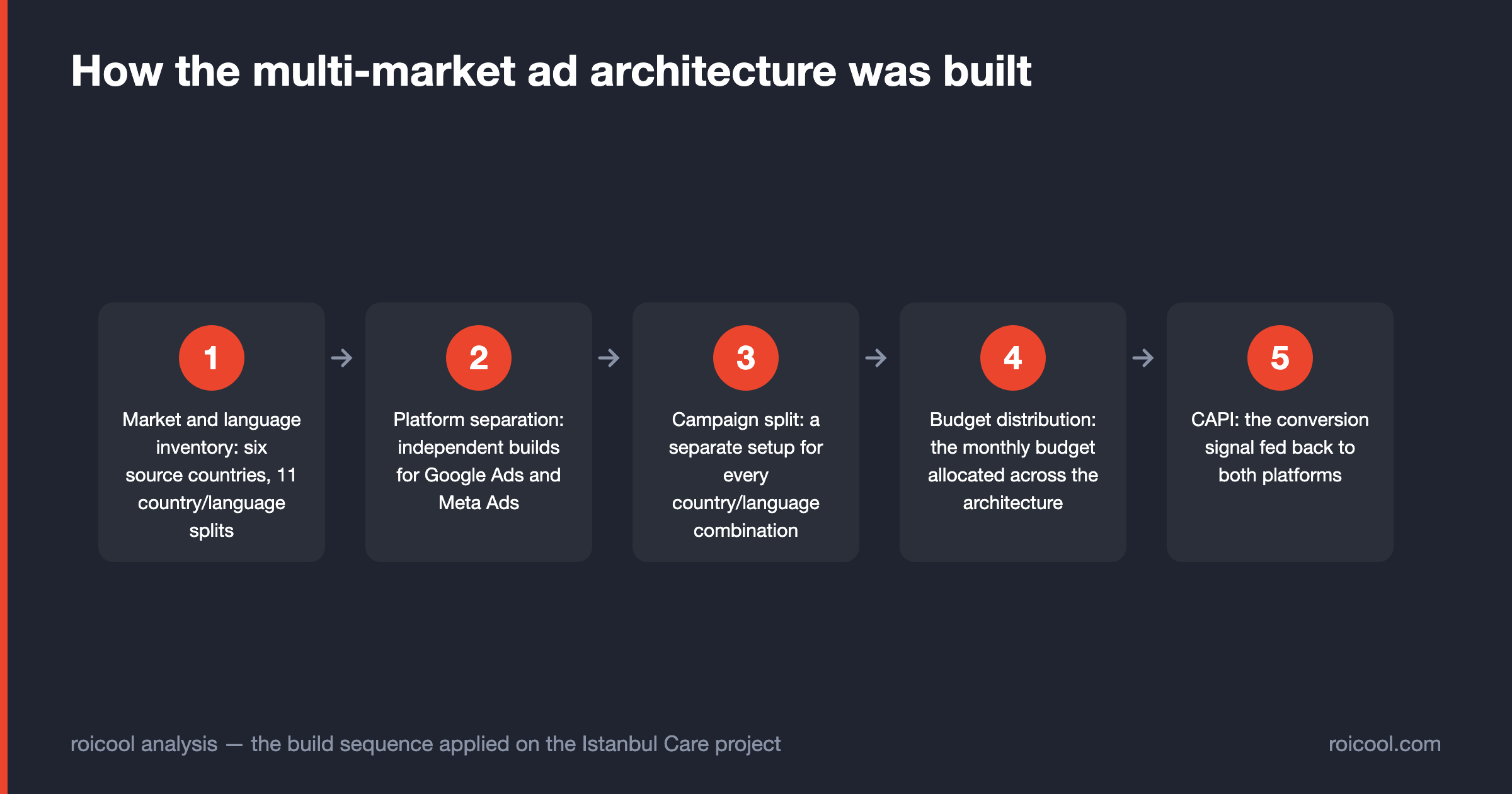
The number that drives the build is the split count, not the market count. Google Ads and Meta Ads are set up separately for each of 11 country/language combinations1 — one country can be targeted in more than one language, and one language crosses borders.
The challenge: six source countries, two platforms, one account map
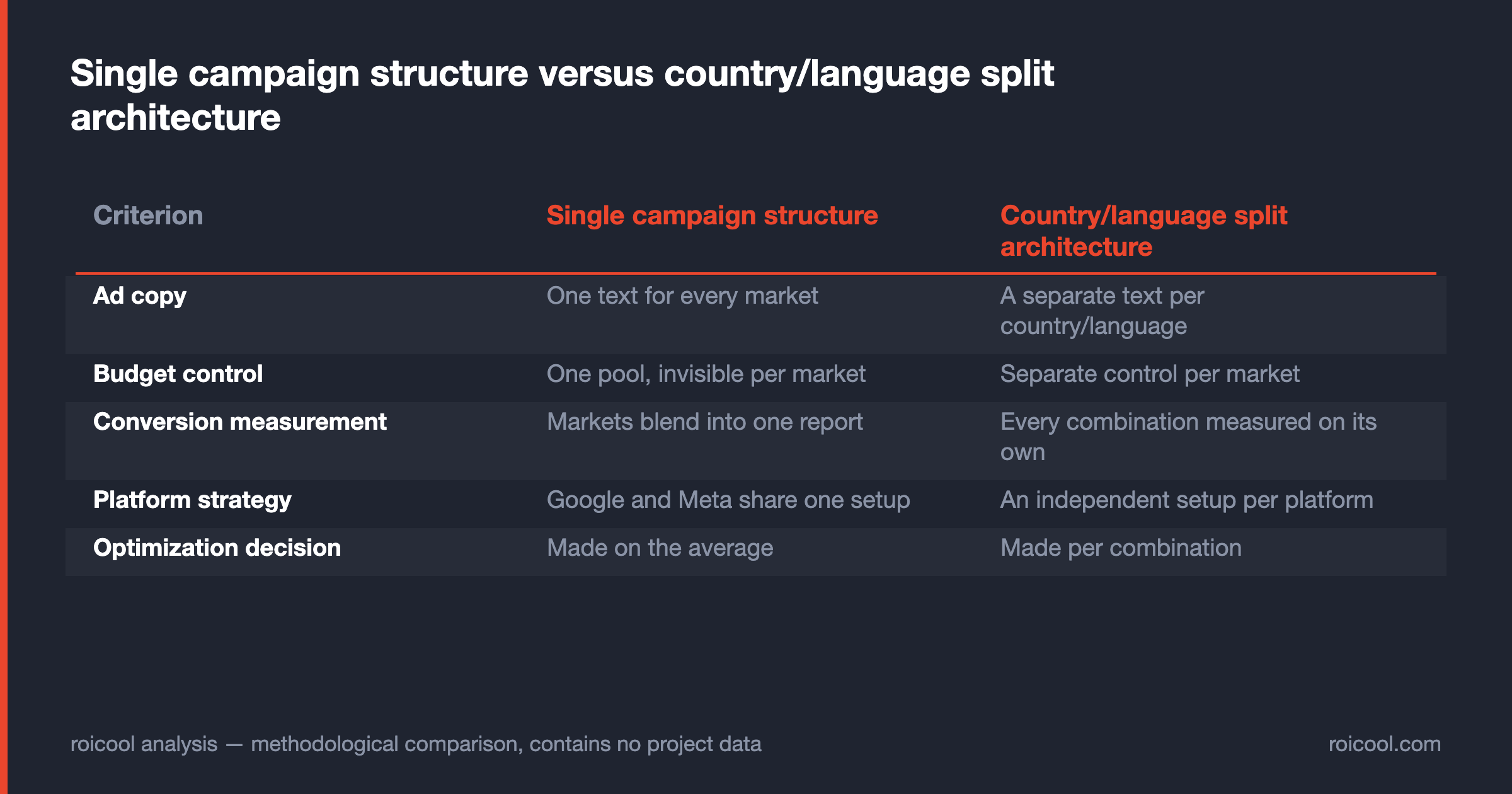
Complexity here comes from the splits, not from the size of the account. One map holds different countries, different languages and two ad platforms at once. Pooled together, the market that performs disappears into the average.
Patient intent is not the same in every market
Requests from different source countries do not behave alike: decision time, the language of the exchange and the proof a patient wants before booking all shift. One ad text across every market averages them away.
A language split is really a campaign split
Six source countries1 and 11 splits1 are not the same number: a country can be targeted in more than one language, and a language crosses borders. Each split carries its own ad text, its own targeting and its own compliance question — health advertising regulation in Türkiye draws one frame, target markets another.
The strategy: building campaign architecture around country and language splits
Three decisions carry the architecture: platforms built independently, budget following that build, conversion signal fed back without loss.
1. Building Google Ads and Meta Ads separately
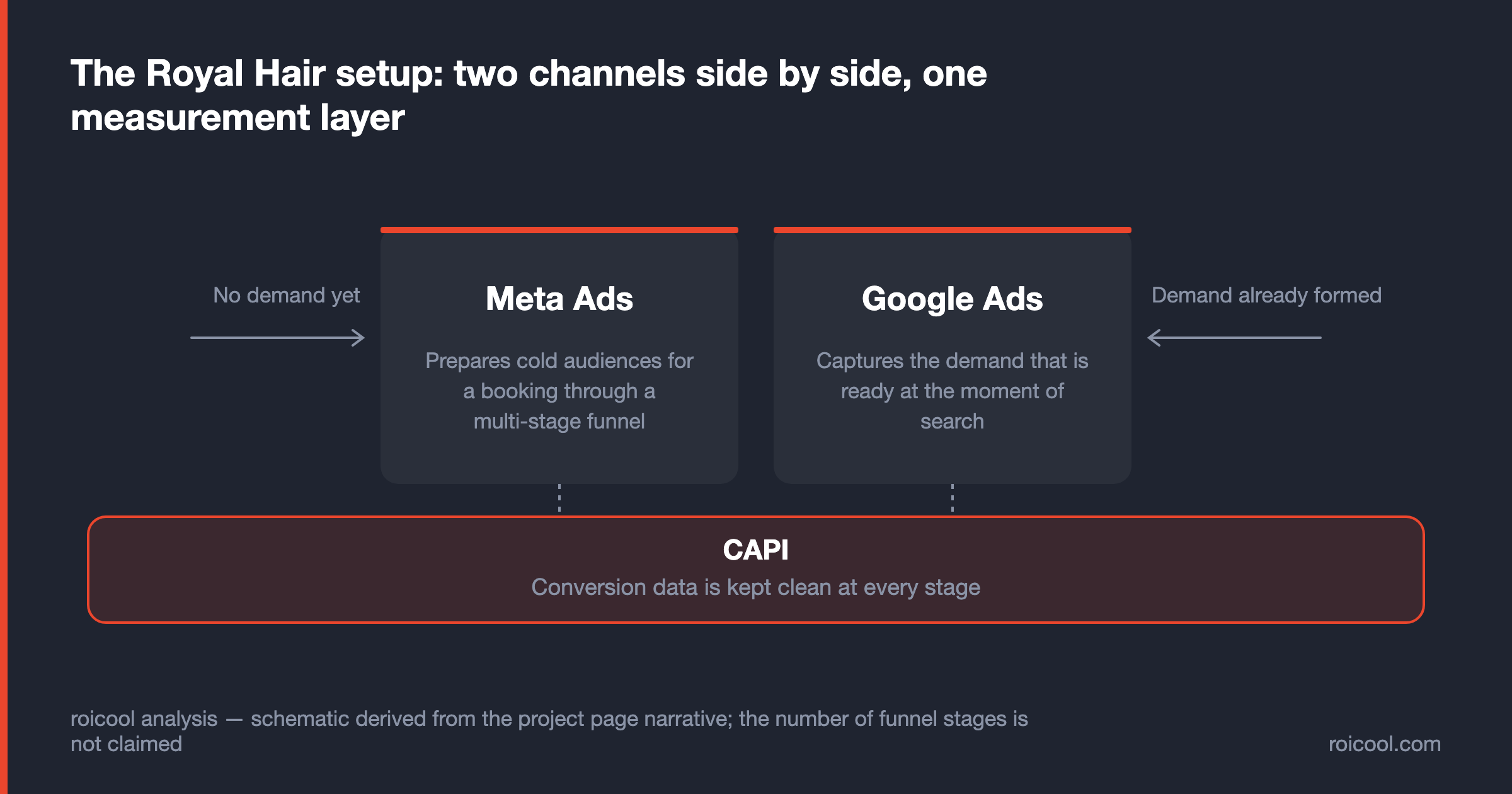
Google Ads and Meta Ads were set up separately for each of the 11 country/language combinations1. The two platforms meet the same patient at different moments: on the Google Ads management side demand is already expressed as a search, on the Meta Ads platform it still has to be created. On Meta the split follows the audience profile of the 11 countries and languages1.
2. Distributing the budget by architecture, not by market
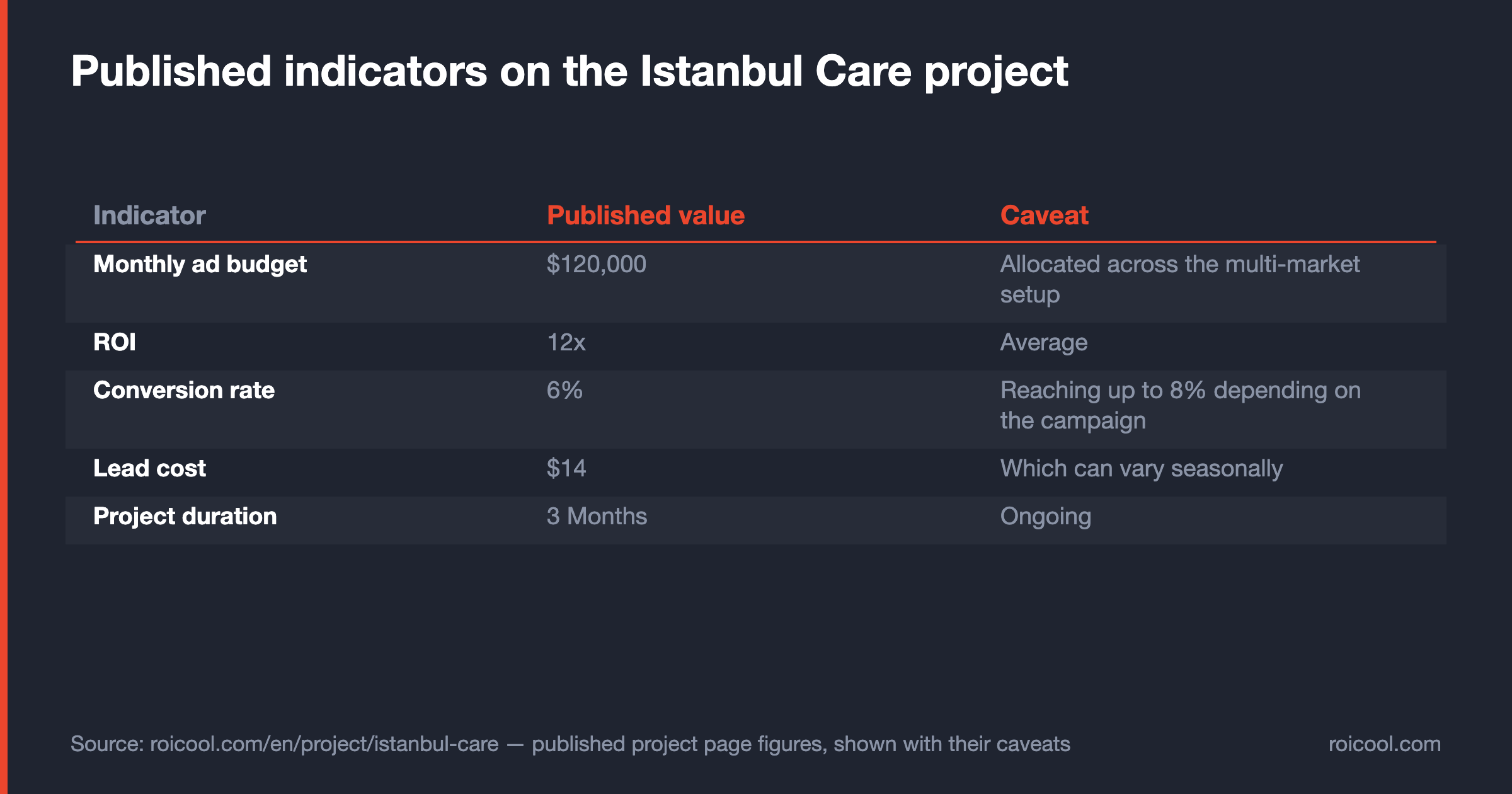
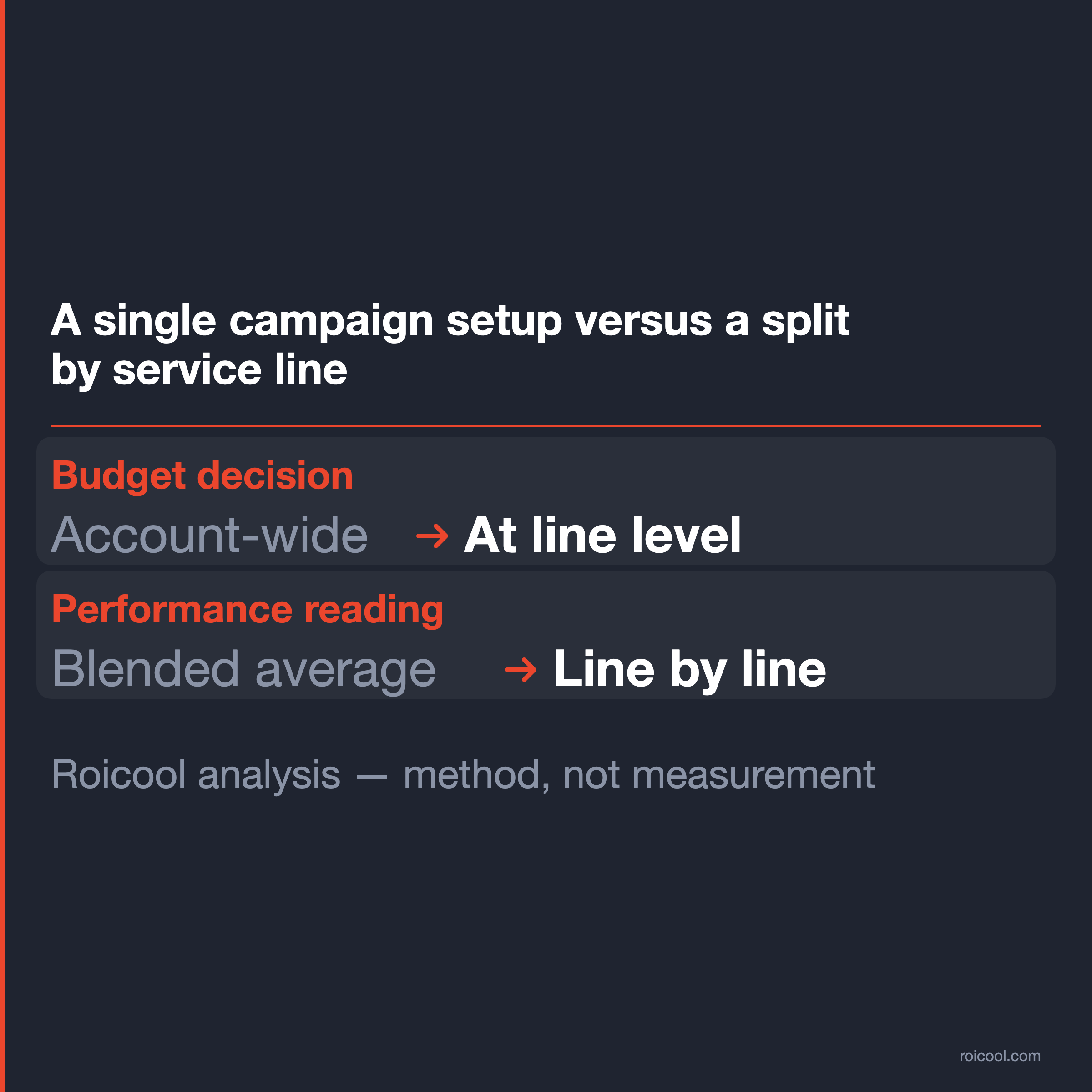
The $120,000 monthly ad budget is allocated across this multi-market setup1. The line item is not the achievement; what matters is seeing how much reaches which split. Divided by combination, every line carries its own budget, conversions and report; Looker Studio sits in the technology set1.
3. Feeding the conversion signal back without loss through CAPI
Conversion API (CAPI) takes the conversion event off the browser and sends it to the platform from the server. Here it captures conversion data without loss1 and keeps that data consistent across platforms1. In a multi-market build every split then produces its own conversion signal.
Results: published performance indicators and the client's own comment
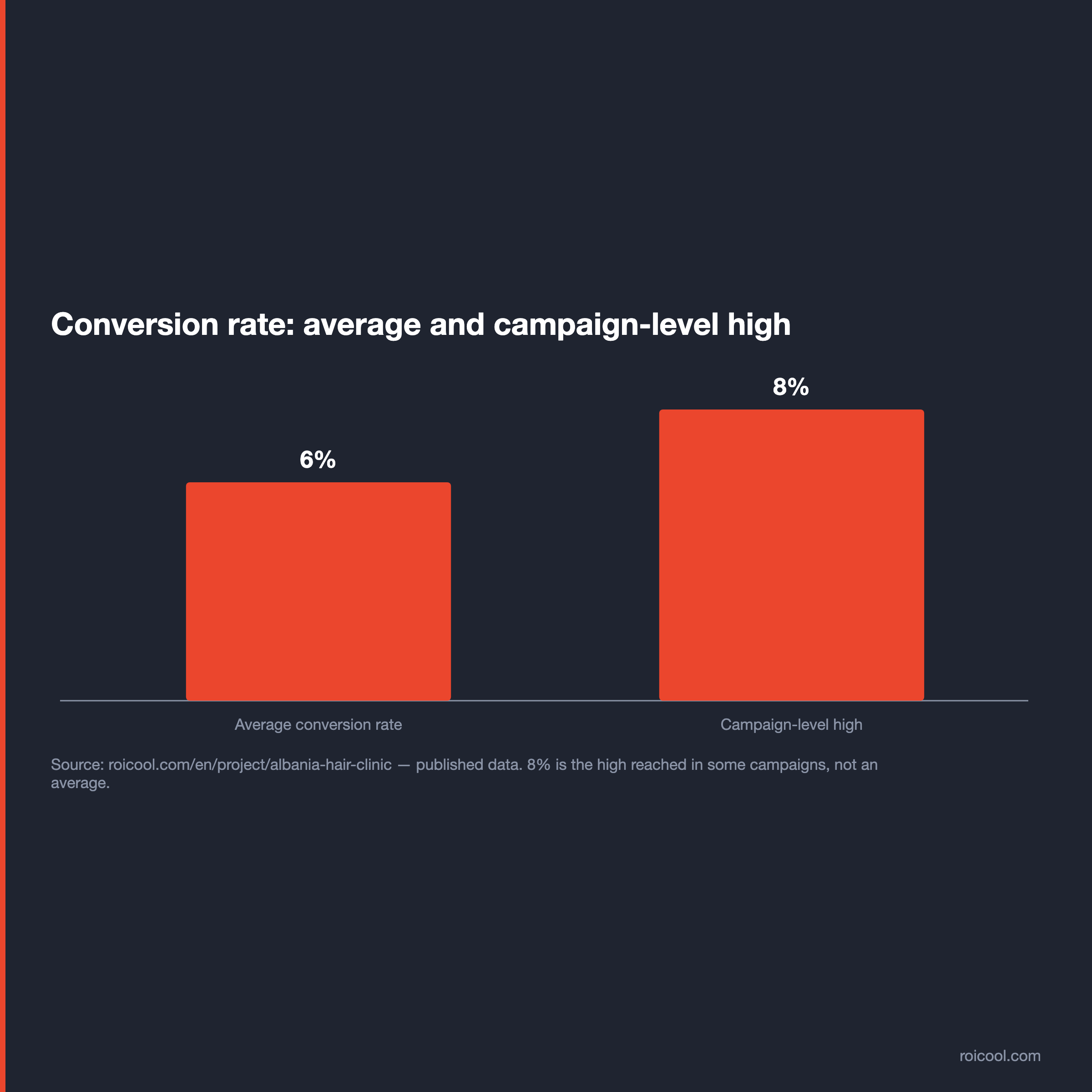
Every figure below is already public on the Istanbul Care project page. The project duration is published as 3 Months and the work is ongoing1. The indicators: an average 12x ROI1, a 6% conversion rate reaching up to 8% depending on the campaign1, and a $14 lead cost that can vary seasonally1.
"After we started working with Roicool, our patient application process became far more organized and trackable. With strategic campaign management, CRM integration, and transparent reporting, we run the process with confidence." — Istanbul Care Team, Verified Comment
These are a published snapshot, not a fixed promise: the conversion rate moves with the campaign, the lead cost with the season. No before-and-after comparison is drawn, because no starting value has been published. The average makes sense only next to the architecture: each of the 11 combinations produces its own conversions1.
The lesson: multi-market complexity is handled by architecture, not by budget
What grows with the number of markets is not cost but the number of decisions. Every added country and language brings its own ad text, targeting and conversion measurement. If the architecture cannot hold those splits, a larger budget will not rescue the outcome: spend rises, learning does not.
Three questions transfer to any multi-market account: how many country and language splits do you have, which platform breaks along which split, and does the conversion data come back intact? At Istanbul Care those answers sit in the account structure, so each of the 11 combinations is managed on its own1.
Order matters: inventory first, platform separation next, budget last. Put budget first and the architecture forms around it; the splits never get built.
.png)