

Case analysis: one campaign setup cannot hold a broad service range
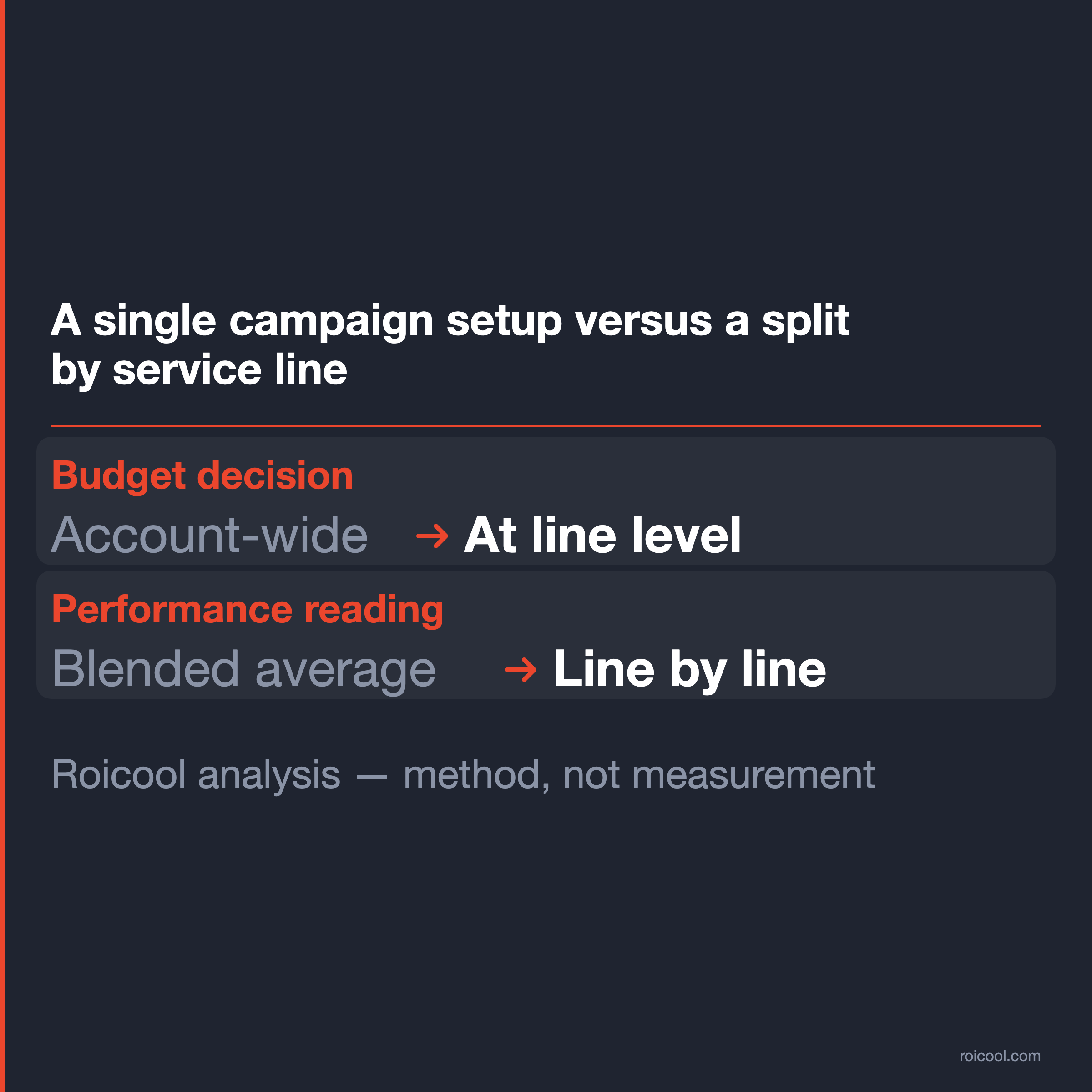
A clinic that sells hair transplants, dental work and aesthetic treatments side by side1 hits a structural problem before a creative one. At EsteMoon Clinic we made the campaign split by service line the working unit of the account: budget and bidding decisions belong to a line, not to the whole account.
The group runs several branches1 and the monthly ad budget is $150,000.1 Scale is the context of this case, not its argument; what matters is the structure the budget sits on. For a health tourism marketing agency the question is this: how does a broad service range become a campaign breakdown, and how does organic follow?
Below: what the split becomes on the account side, where SEO in 10 languages1 fits, and how the two legs meet. Every figure comes from the clinic's public project record.
The challenge: different service lines mean different search intent
Service lines differ by more than price; search intent and decision time differ too. Someone researching a hair transplant compares options for weeks; someone with a dental problem books far sooner. The same funnel, offer and landing page cannot serve both, and one campaign setup averages that difference away.
- Intent gap: each service line brings its own questions, comparison criteria and decision window.
- Budget drift: pooled into one account, spend flows toward the line that converts cheapest, and the valuable but expensive line goes quiet.
- Language spread: multilingual demand does not spread the same way across lines, so one language-and-budget rule fits none of them well.
None of this is specific to EsteMoon Clinic; it is structural in any multi-service account. The split is therefore a setup decision, not a reporting preference.
Strategy: turning a campaign split by service line into account structure
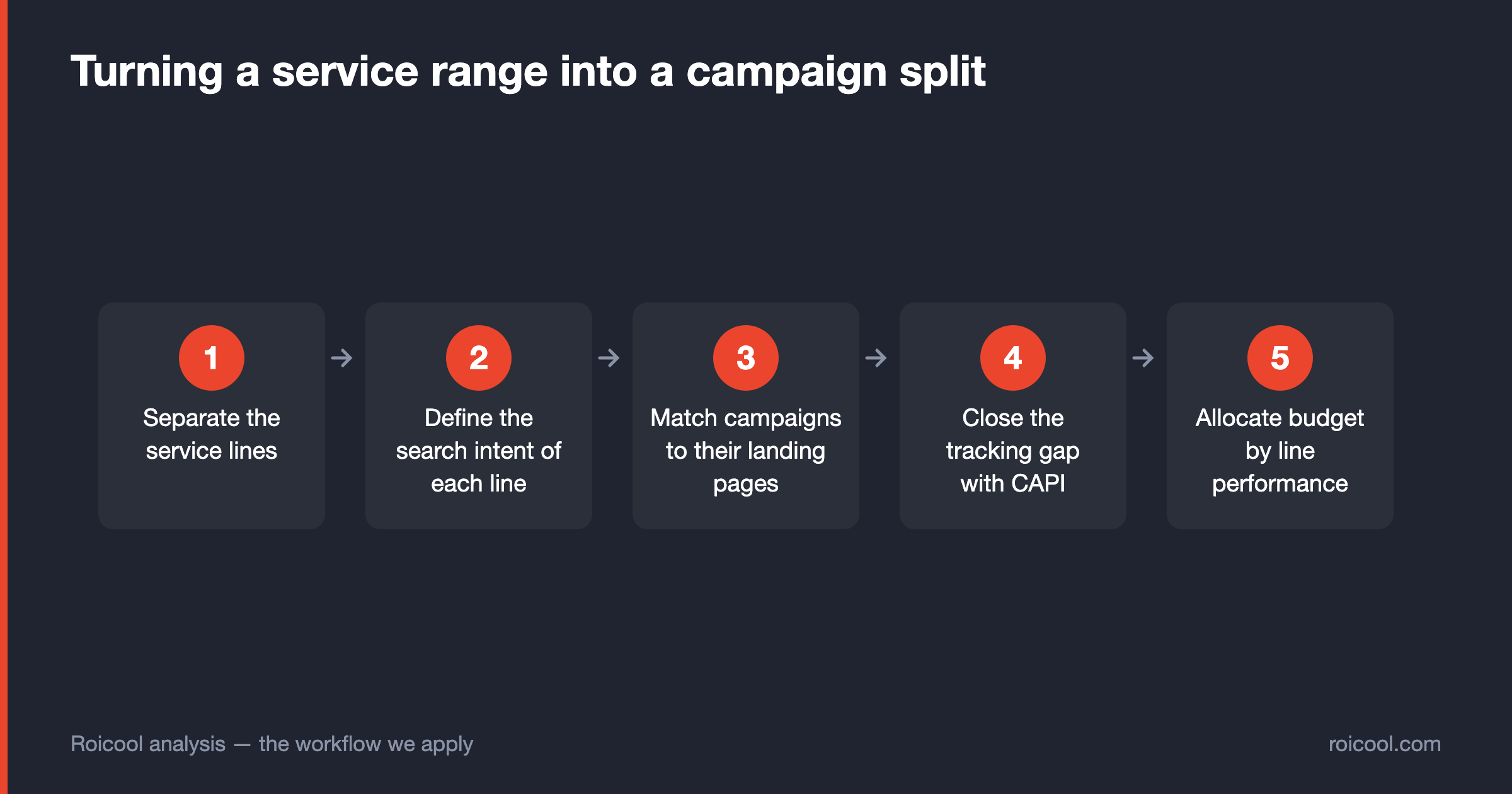
Three connected moves turn breadth into structure.
Separating campaigns by service line
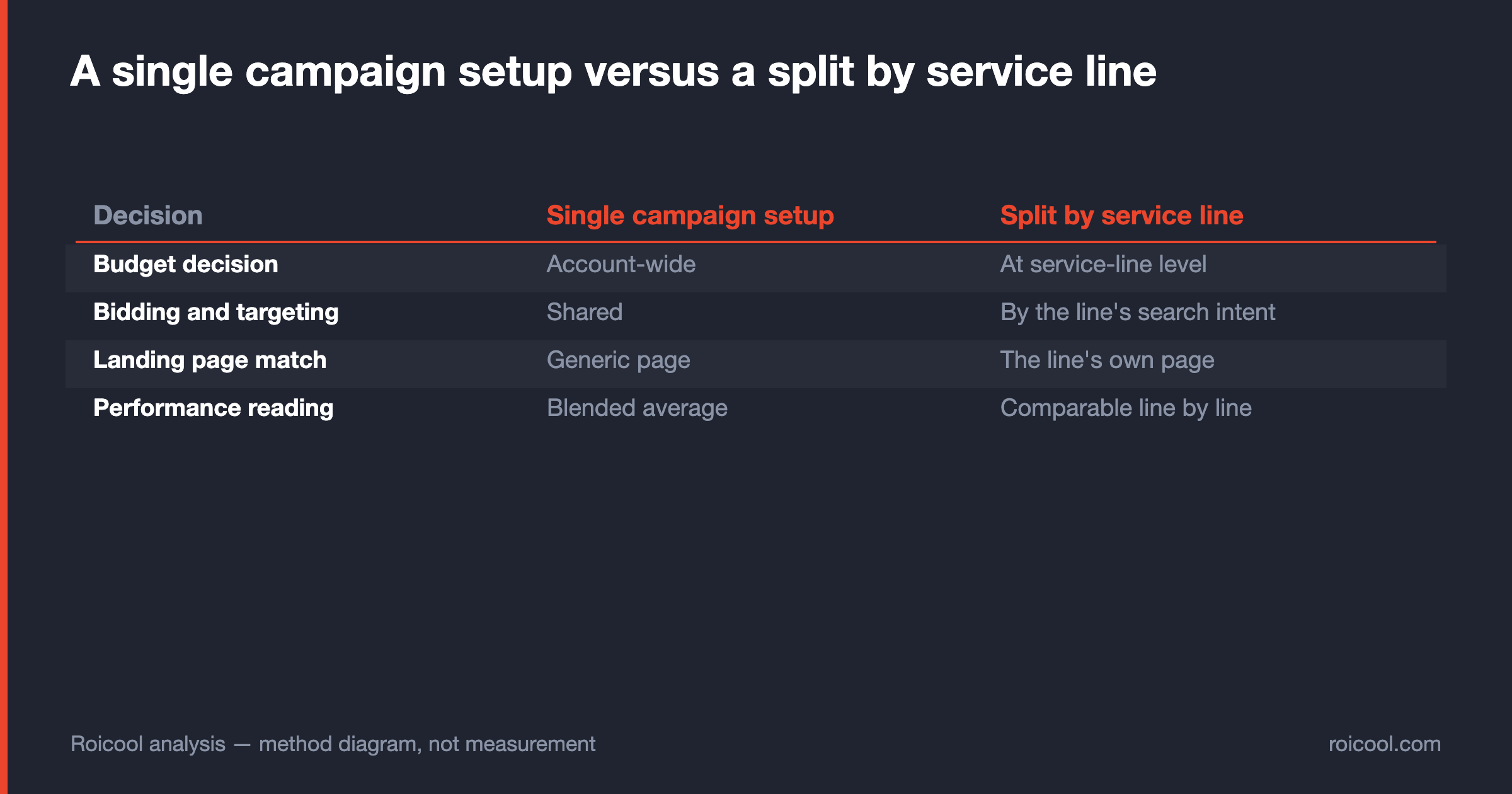
The unit of the split is the service line. In Google Ads and Meta Ads alike, each line lives in its own campaign set; hair, dental and aesthetic run as separate builds.1 Budget, bidding and landing page matching drop to line level, so one line's performance no longer disappears into another's average.
Giving Google Ads and Meta Ads different jobs
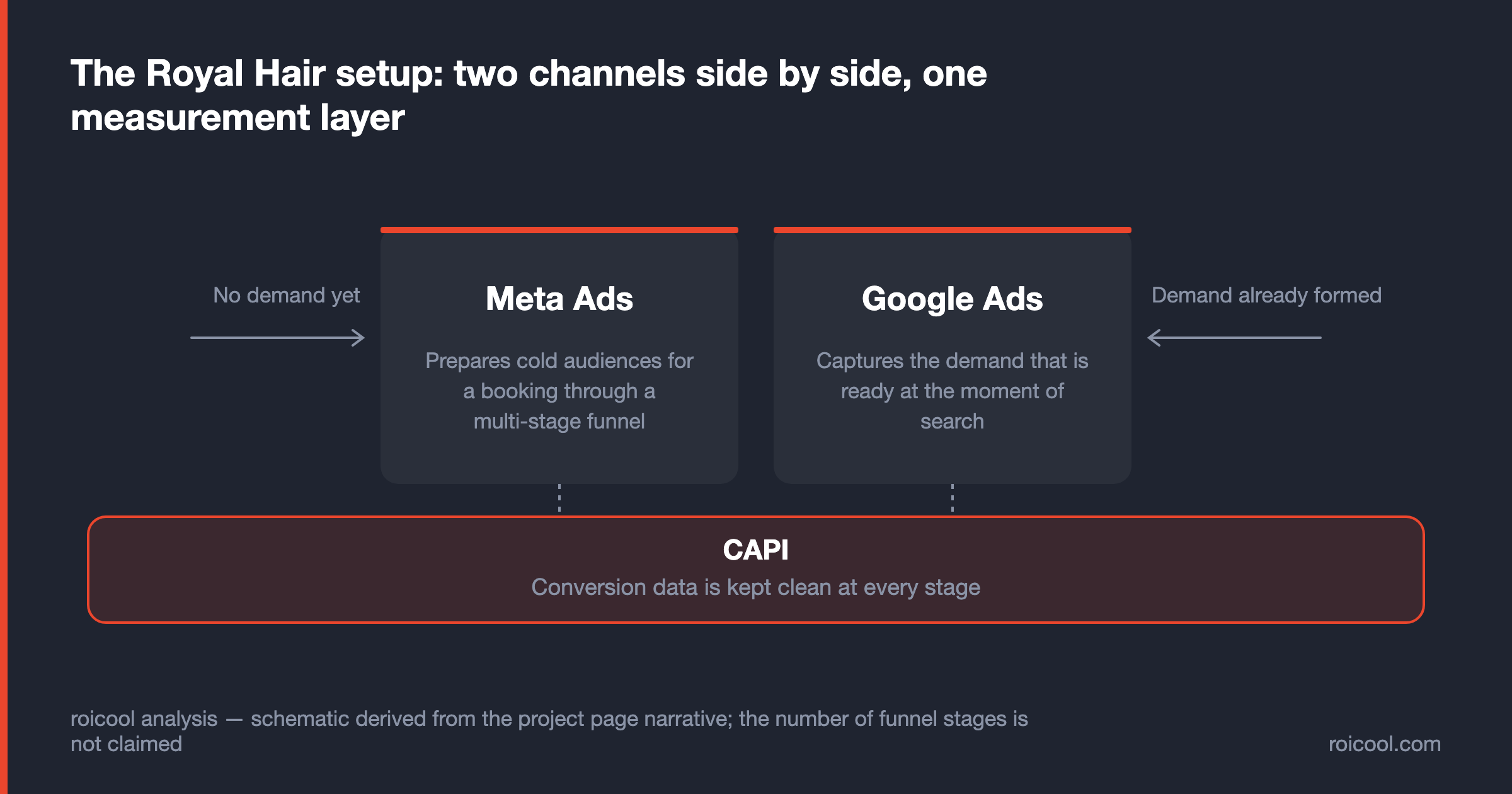
Both channels run together and both carry the same split.1 Google meets demand at the moment of search; Meta builds it before the search happens. Because the unit is the same on both sides, cross-channel comparison holds. Line-level account setup and bid management run through our Google Ads agency team.
Spreading the budget over the structure
The $150,000 monthly budget1 is not released from one pool; it is spread over the split, with the service line as the deciding unit. Conversion data is captured without loss through the Conversion API (CAPI),1 which makes line-to-line comparison trustworthy. Reporting runs in Looker Studio.1
- Separate the service lines.
- Define each line's search intent.
- Match campaigns to landing pages.
- Close the tracking gap with CAPI.
- Allocate budget by line performance.
The organic leg: SEO consulting in 10 languages
Advertising buys visibility; organic work makes it last. EsteMoon Clinic's SEO consulting runs in 10 languages,1 and that single line is the whole public scope of the organic side. What follows is the route we take when we build a multilingual organic leg.
The method: each language works with its own content, versions are mapped to one another with hreflang tags, and the service-line separation holds at page level. Versions of the same service should not compete in search results.
Sharing one split across paid and organic ties them together: once it is visible which line draws demand in which language, content priority and budget read one table.
Which languages, which pages, which rankings — the public record does not say. It states only that the work runs in 10 languages;1 the setup logic here is ours.
Results and takeaway: what the split made possible
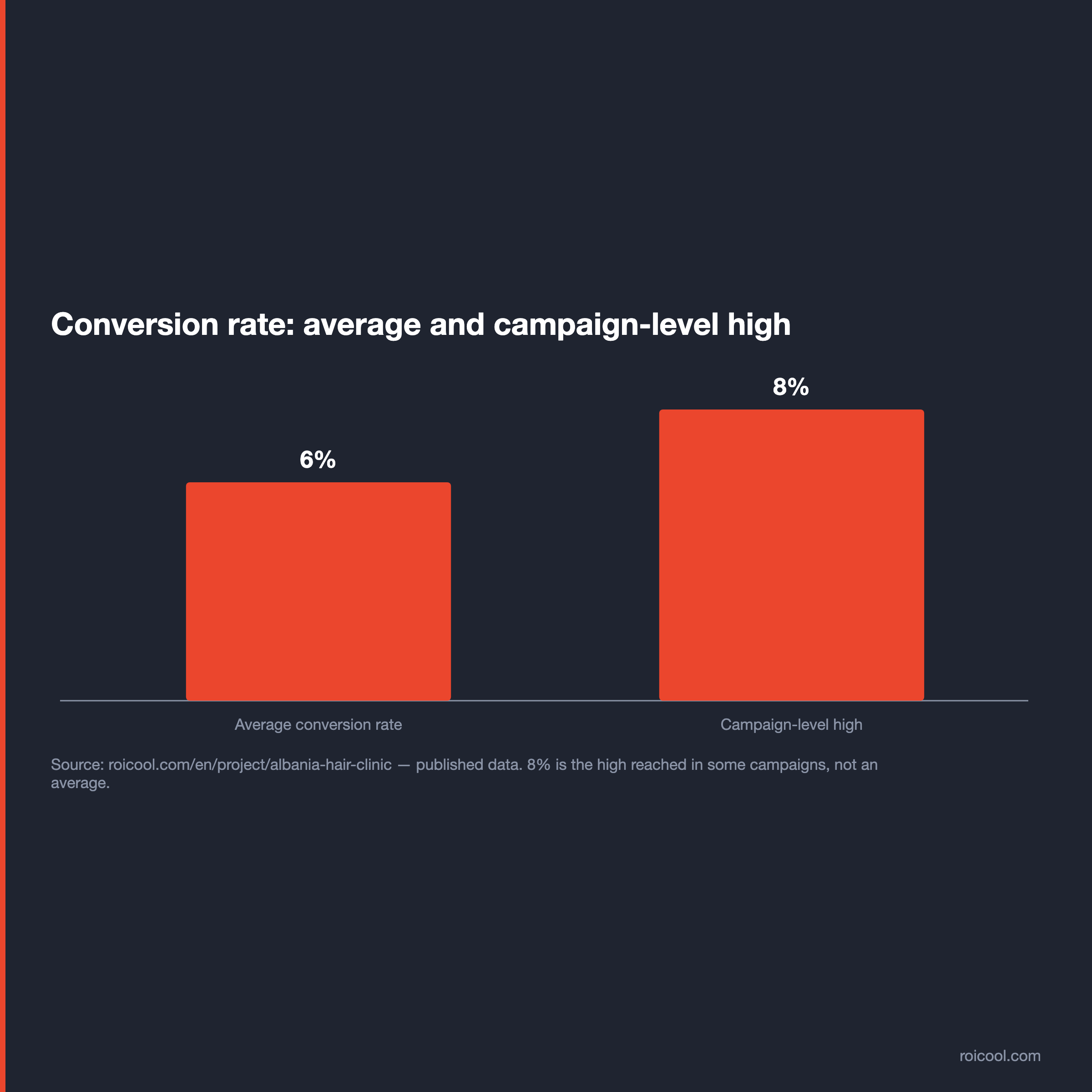
The clinic's published figures: an average 13x return on investment,1 a conversion rate of 7% (reaching up to 8% depending on the campaign)1 and a lead cost of $13 (which can vary seasonally).1 The brackets matter: these are ranges that move with the campaign and the season, not fixed commitments.
The clearest gain shows in the reading: which line brings patients at which cost is visible separately, and the budget decision is renewed against it.
The engagement is two months old and still running,1 so this is not a closed success story but a structure under active optimization. The figures come from the EsteMoon Clinic project page.
Breadth alone is neither an advantage nor a handicap. Once it is manageable, scale stops being a risk and works as leverage — and what makes that possible is not the budget's size but the split underneath it.
.png)