
Case analysis: one budget, two channels doing two different jobs
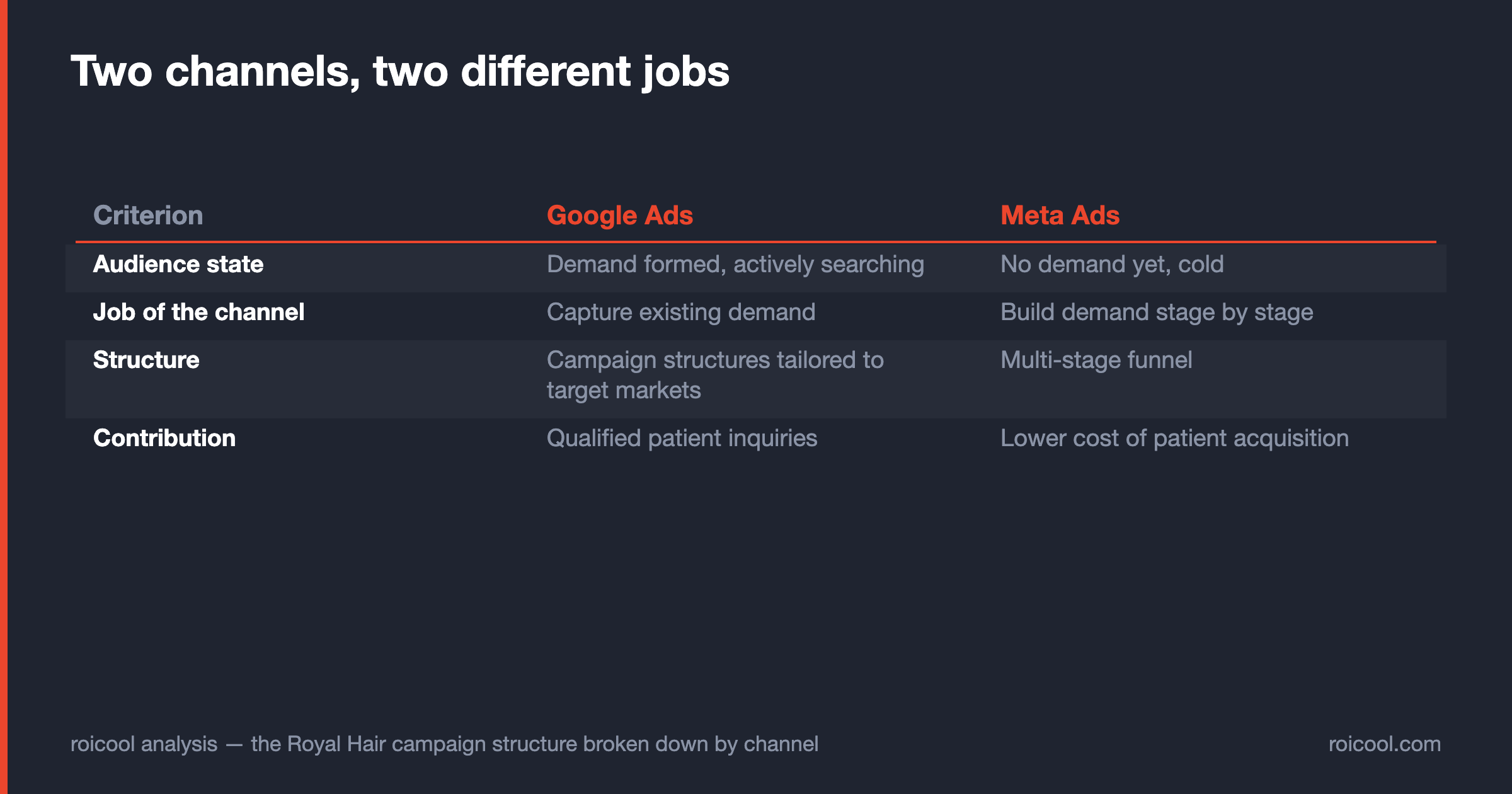
At Royal Hair, Google Ads and Meta are not doing the same job. Google Ads meets the person who is already searching for a treatment. The Meta funnel starts earlier: it reaches people who have no such intent yet and carries them toward that point in stages. The $60,000 monthly ad budget1 is balanced between those two functions — by the role each channel carries, not by a fixed percentage.
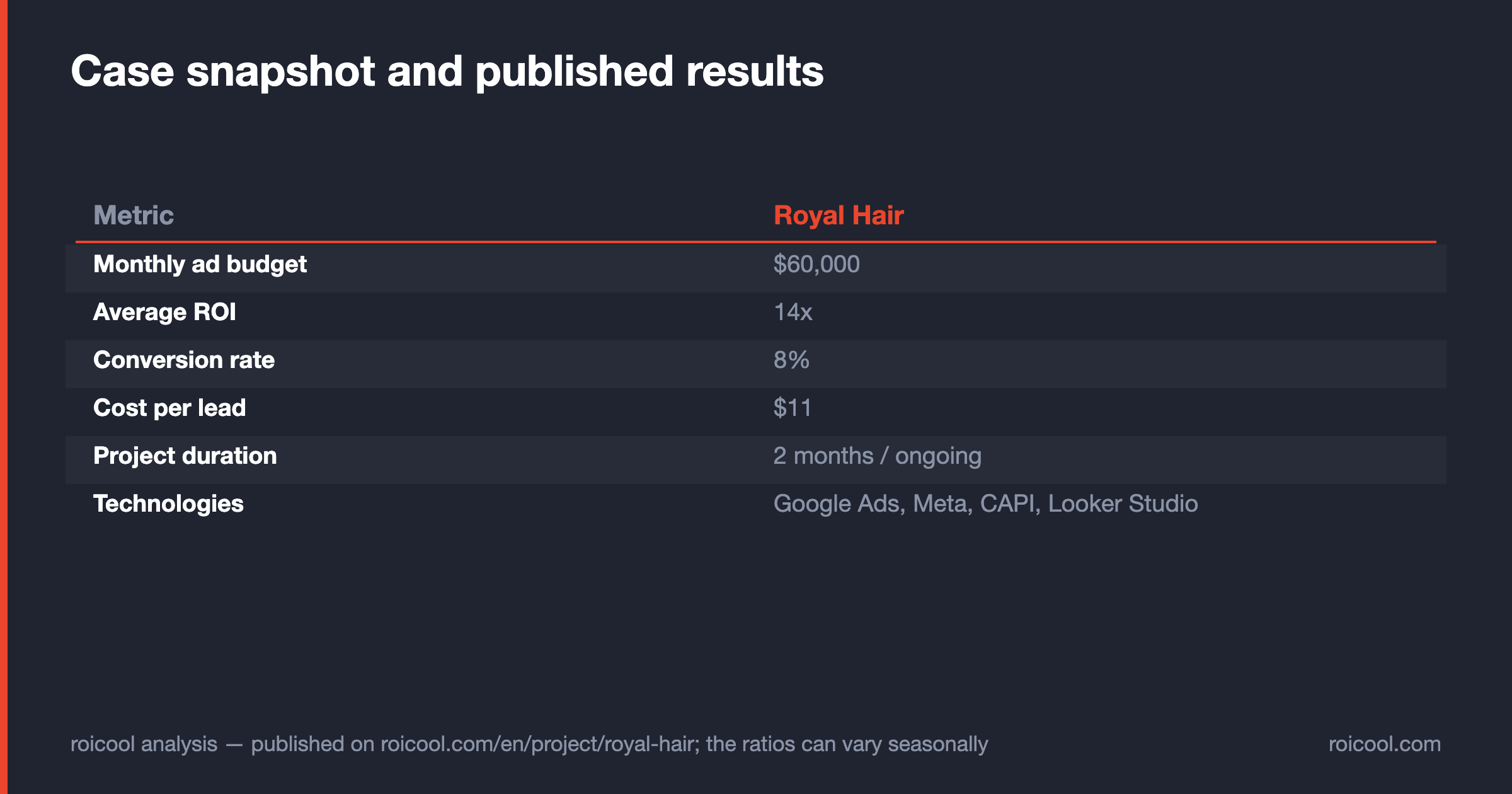
The snapshot: the customer is Royal Hair, the work has run for 2 months and is ongoing1. Three workstreams sit underneath it — Google Ads, Meta and a Conversion API (CAPI) setup.
A multi-stage funnel carries an audience to the decision point through steps that feed each other rather than through one ad. Each stage has its own message and its own audience. Here that structure sits on Meta, and CAPI carries the measurement.
Why premium positioning demanded a multi-stage Meta funnel
Royal Hair is the Istanbul Care family's premium sister brand, and it carries that positioning into the advertising1. The ad language and the campaign structure were built on it rather than on a ready-made template.
Premium positioning lifts the price expectation and stretches the decision. In high-ticket health tourism, nobody books after one visit. Showing a booking form to someone who has just met the brand gets no answer. Demand needs recognition, then trust, then action; no single impression delivers all three. Staging is not a stylistic choice here — audience behavior imposes it.
Two brands under the same roof do not need the same setup. The problem in this account is depth: moving one audience, stage by stage, to the point of decision.
The setup: Google Ads captures demand, Meta creates it
The two channels do not share the budget; they share the work. The difference is function, not scale: one collects demand that exists, the other builds demand that does not.
Google Ads: demand that is already ready at the moment of search
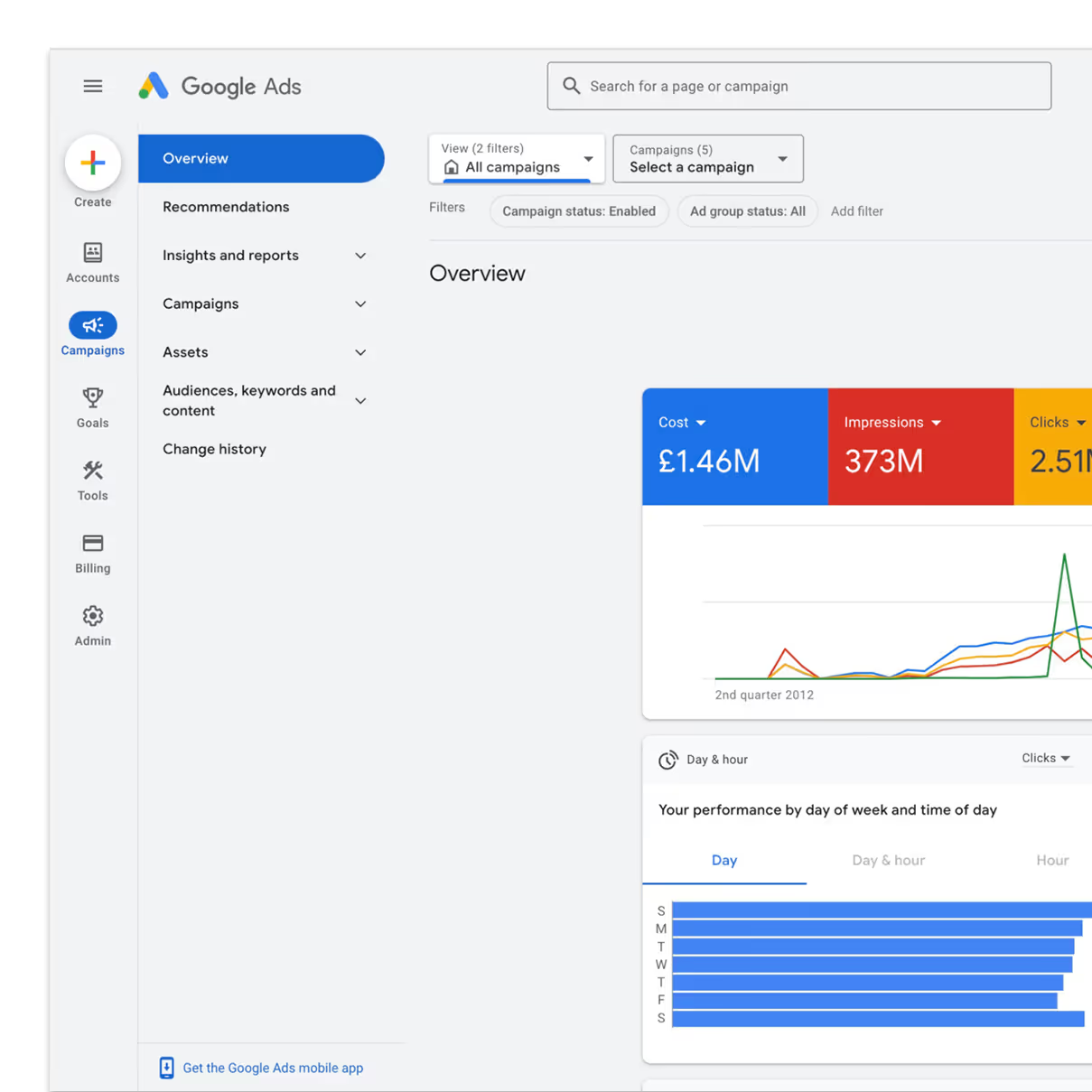
Someone searching is already inside the decision process. Campaign structures tailored to target markets catch that intent and turn it into qualified patient inquiries1. The job on the Google Ads management side is not persuasion; it is appearing on the right query and filtering what arrives.
Meta: from cold engagement to warm sales
On the Meta Ads side the audience starts cold: people who have not heard of the brand. Instead of pushing them into a form in one step, the funnel stages the contact. Each stage builds the audience for the next, and that is the mechanism that pulls the cost of patient acquisition down1.
So the balance is not tied to a fixed percentage. The $60,000 monthly budget is balanced across the two channels1; the measure is the work each one carries.
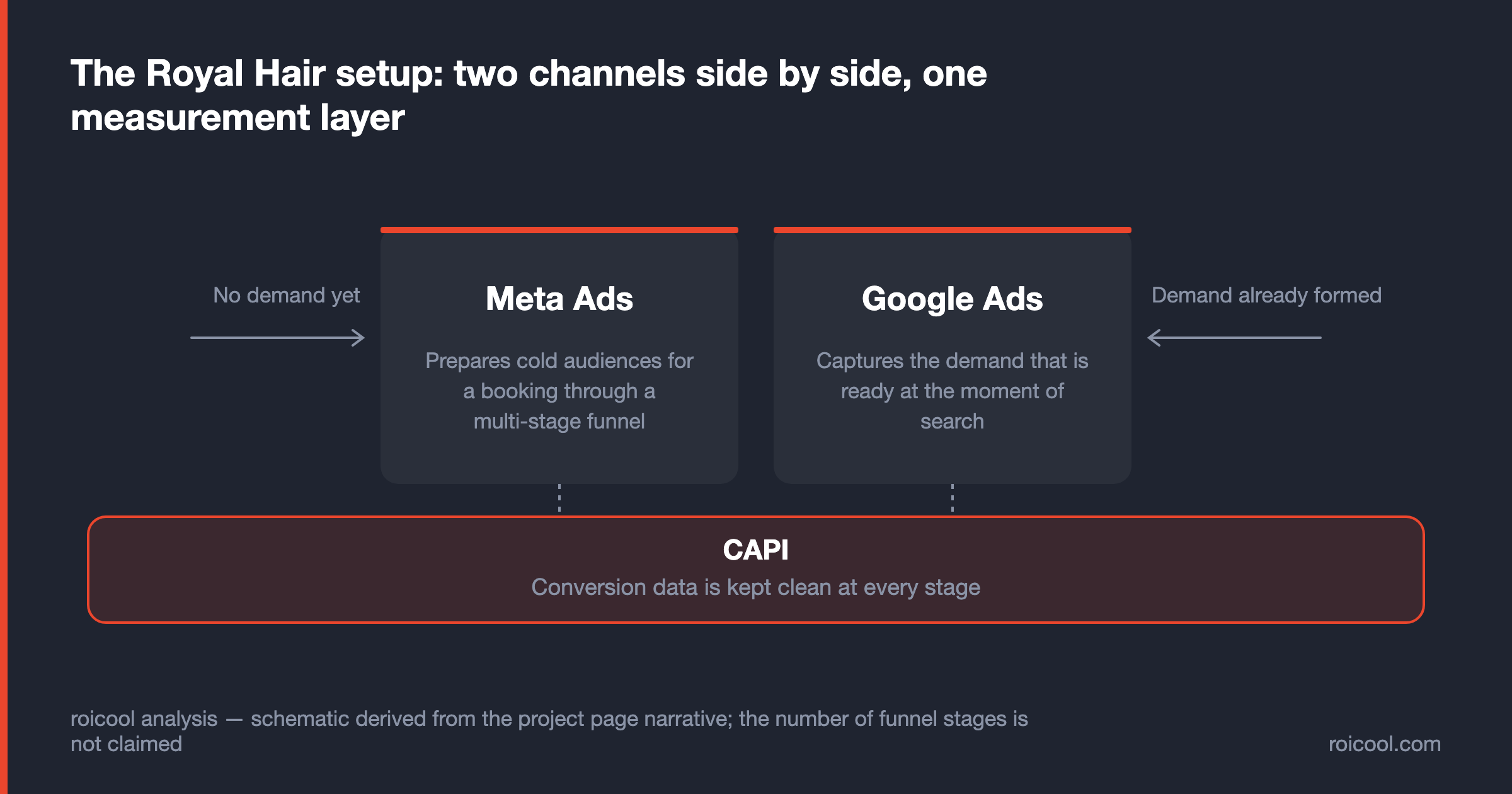
CAPI: what measurement has to show in a staged funnel
In a single-step campaign, measurement is simple: one ad, one form, one obvious source. A staged setup changes the question. When only the final conversion is visible, the stage that prepared that sale stays invisible and budget drifts to the wrong place. The error is quiet: reports look fine while the upper stage is starved and the lower stage runs dry weeks later.
A full CAPI integration keeps conversion data clean at every stage of the funnel1. CAPI is not an advantage in itself; it is infrastructure every ad account is expected to have. Its value here is that it makes the whole sequence visible, not only the last step.
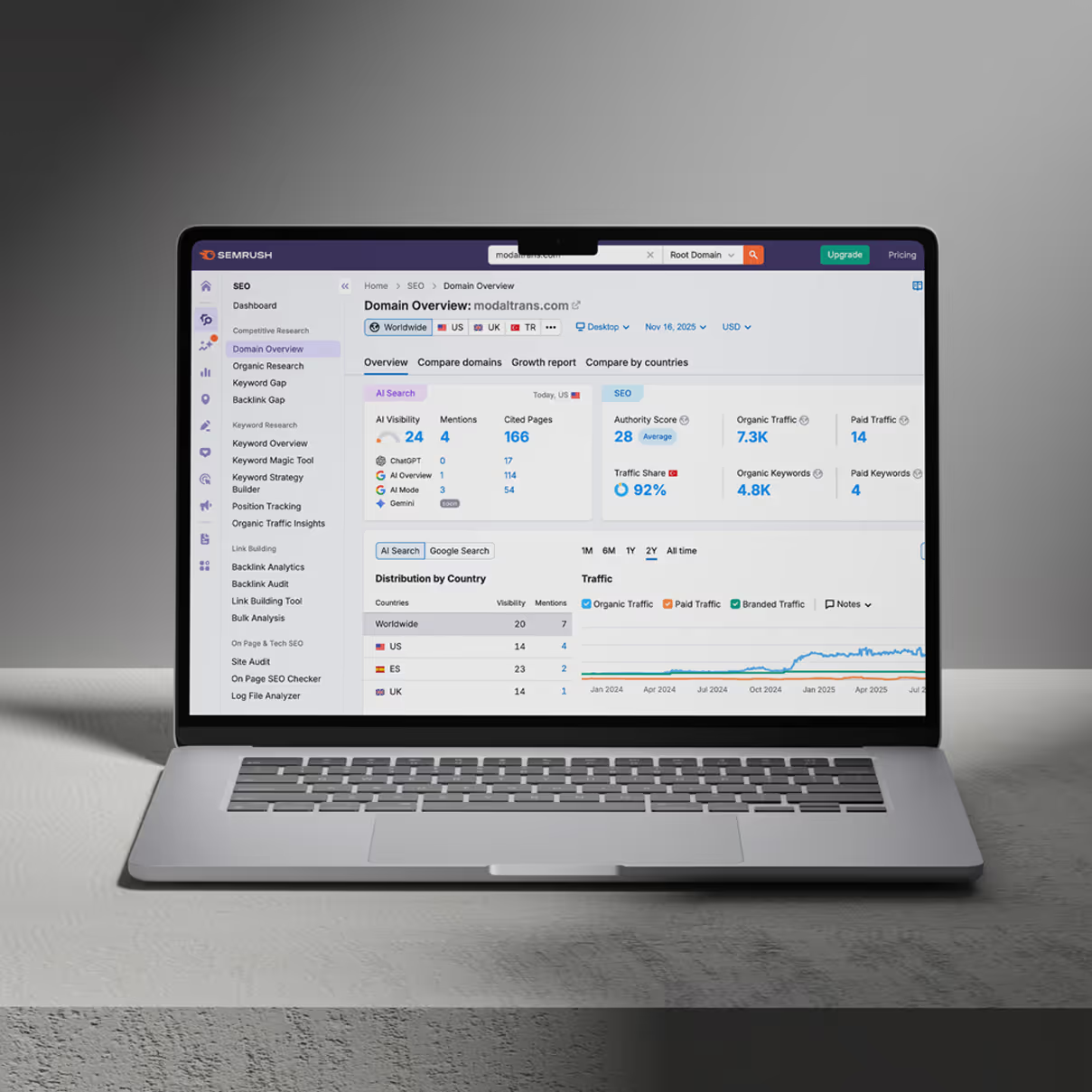
Server-side measurement is completed by Looker Studio reporting1, so both channels can be read in one table. Without it, the balance would be set blind.
Results: 14x ROI, an 8% conversion rate and $11 per lead
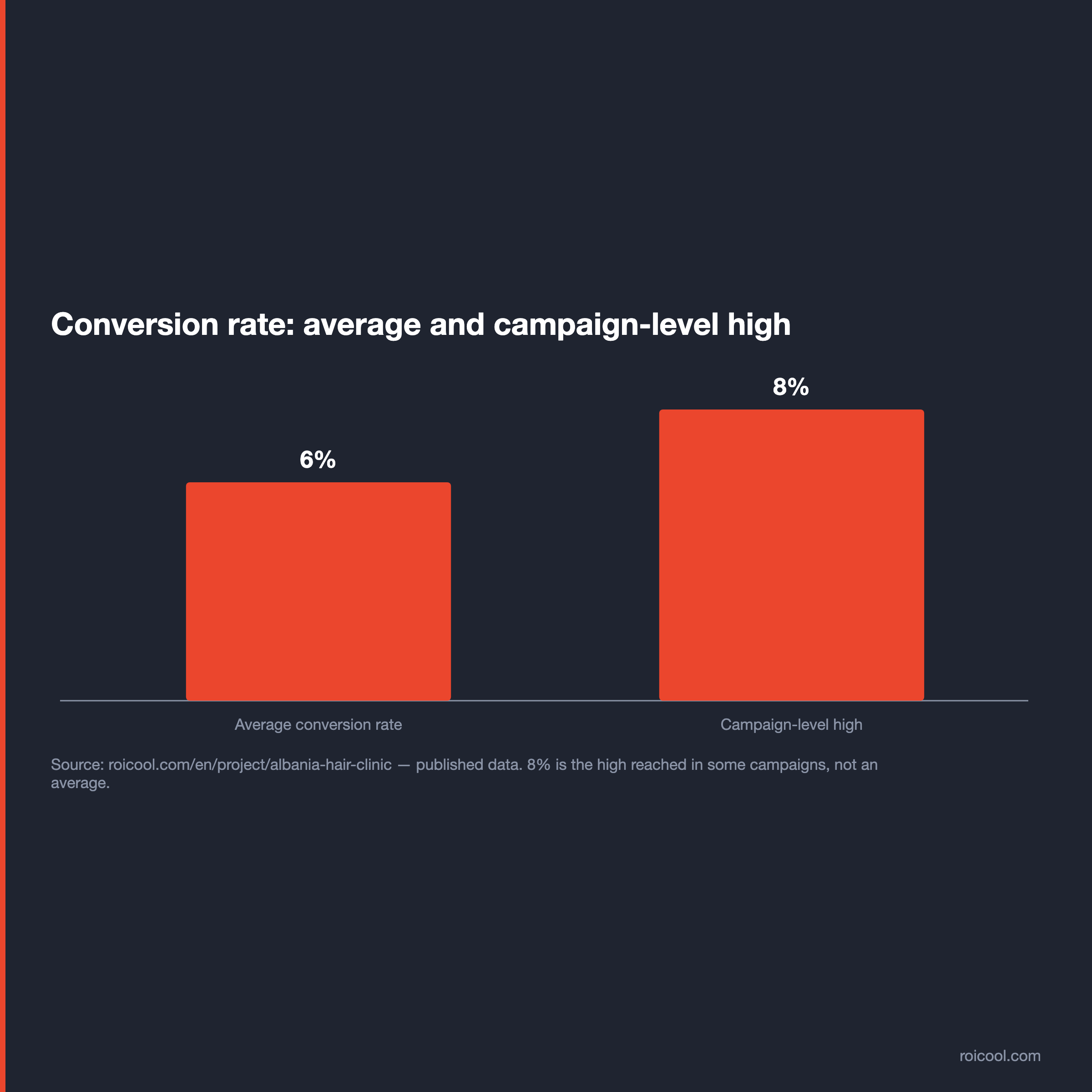
Three numbers are published: an average 14x ROI1, an 8% conversion rate1 and an $11 lead cost1. All three can vary seasonally; they are the average of the work so far, not a fixed promise.
Reading them apart from the budget misleads: these ratios came out of splitting $60,000 a month1 across two different jobs — the side that captures demand makes conversion cheaper, the side that prepares demand feeds the volume.
The three figures measure different parts of the same setup: the conversion rate reflects the funnel's preparation, cost per lead reflects targeting accuracy, and return on investment reflects the two combined.
From the clinic management's verified comment: “After we started working with Roicool, we gained a digital marketing setup that reflects our premium positioning.”1
The observation: these ratios came from splitting the budget into two separate jobs and staging the cold audience, not from making the budget bigger. Our lead generation strategy page sets out how that structure is planned.
.png)