




Logistics marketing agency for freight forwarders and transport companies
We help shippers find you when they search for a service or a lane, on LinkedIn and in AI answers, and we measure, channel by channel, which quote requests turn into contracts.
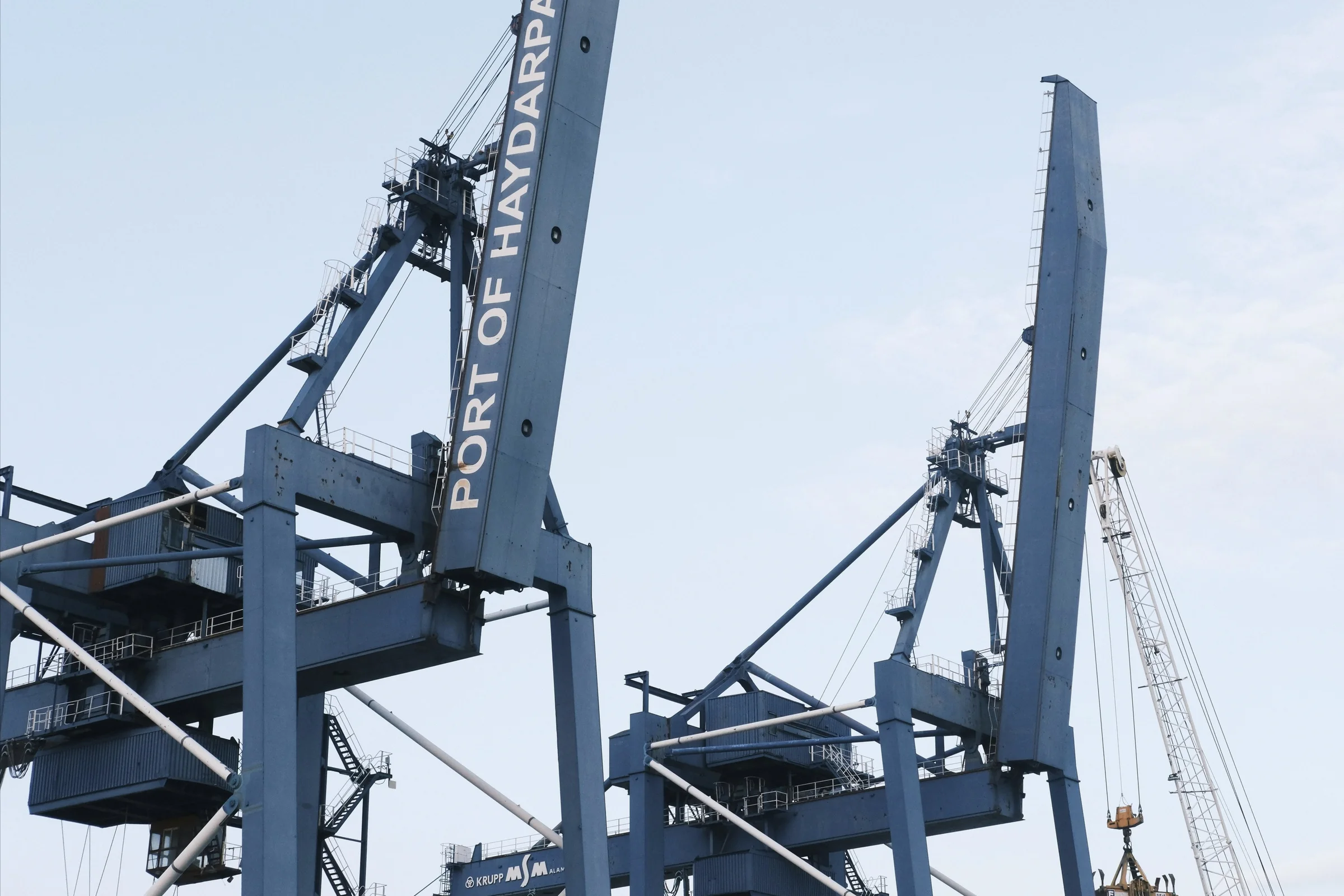 Road and sea freightCemrecan Yurtman · Unsplash
 Freight forwarding and customsGeorgii Eletskikh · Unsplash
 Air cargoEva Darron · Unsplash
Signature tool for logistics · live
In logistics, the unit is not the lead, it's the quote request
In logistics, a form submission tells you little on its own. A shipper asks several companies to price the same shipment; some requests are one-offs, some are for a lane you don't serve, and some are regular freight that could become a contract. So the unit to measure is not the "lead" but the quote request: how many came in, how many qualified, how many you priced and how many you won.
Advanced
Weakest step: quote request → qualified request on Directories and marketplaces (20%; 48.2% across all channels). This channel brings the cheapest quote requests ($125) but only 20% of them are qualified.
Most expensive channel per won contract: LinkedIn, $13,333 (average $6,786).
| Channel | Spend | Quote requests | Qualified | Won | Per quote | Per qualified quote | Per won contract | Gross-profit ROAS |
|---|---|---|---|---|---|---|---|---|
| SEO / content | $30,000 | 60 | 36 | 9 | $500 | $833 | $3,333 | 14.4 |
| Directories and marketplaceslittle data | $10,000 | 80 | 16 | 2 | $125 | $625 | $5,000 | 9.6 |
| Google Ads | $60,000 | 120 | 60 | 9 | $500 | $1,000 | $6,667 | 7.2 |
| Trade fairs and events | $50,000 | 25 | 20 | 5 | $2,000 | $2,500 | $10,000 | 4.8 |
| $40,000 | 20 | 15 | 3 | $2,000 | $2,667 | $13,333 | 3.6 | |
| Total | $190,000 | 305 | 147 | 28 | $623 | $1,293 | $6,786 | 7.07 |
The results are only as good as the data you enter. Take quote and won counts per channel from the source field in your CRM. The default values are an example, not a sector average.
Quote form checklist
0 of 17 items are on your form
Skip the items that do not fit your service.
Enter, for each channel, the spend, the quote requests it brought, the qualified and win rates, the average contract value and your gross margin. The tool works out the cost per quote, per qualified quote and per won deal, and names the weakest step. The checklist under it shows whether your form collects what you need to price a job the first time.
Definition
What is logistics digital marketing?
Logistics digital marketing is the B2B work that helps transport, freight forwarding, customs and warehousing companies reach shippers and procurement teams in search engines, on LinkedIn, in industry directories and in AI answers. It collects quote requests and measures which of them turn into contracts.
Challenges
3 things that make winning logistics customers hard
A shipper asks several companies for a price and compares rate, transit time and reliability. Asking for a quote takes the shipper a minute; preparing one takes your operations team real time. If channels are judged by the number of quote requests, the budget flows to the channel that brings the most requests and wins the least business.
A one-off shipment is often booked by a logistics or foreign trade officer. An annual tender is weighed by procurement, supply chain and finance together, and the request for quotation (RFQ) goes to several companies at once. Marketing has to feed both: today's spot demand and the long tender process.
Shippers don't search for "a logistics company". They search for a service and a lane: part loads to Germany, container shipping, a customs broker. Without separate pages that answer those searches with real information, you are invisible on the most commercial searches.
Channel plan
A channel plan for logistics companies
| Channel | What it does | When | How it's measured |
|---|---|---|---|
| SEO: service × lane × country pages | Lasting visibility on commercial searches | Always on; first results within months | Quote requests and won business by page (CRM) |
| Google Ads: search by lane | Being there when a shipper looks for a rate today | A new lane, a new country, spare capacity | Cost per qualified quote and per won deal |
| Reaching procurement and supply chain roles | Contract and tender seasons, a target account list | Engagement in target accounts, qualified quotes from LinkedIn | |
| AI answers | Being named when buyers research suppliers | Always on; through content and structured data | AI visibility score, mentions on target questions |
| Industry directories and freight marketplaces | Demand from load boards and supplier lists | Filling capacity | Number of requests and the share that qualifies |
| Email and CRM follow-up | Follow-up after each quote, repeat freight | After every quote, before contract renewals | Quote-to-contract rate, repeat customers |
Site structure
Site structure: service × lane × country
The pages that win a logistics company the most business are usually its service and lane pages. The structure has three layers:
| Layer | Example page | Example search | What the page needs | Pre-filled field on the quote form |
|---|---|---|---|---|
| Service | Part load (LTL) transport | part load transport, LTL freight | Process, cargo types, the FTL/LTL difference, documents | Service type |
| Service × country | Part loads to Germany | part load Germany, freight to Germany | Departure days, transit time range, customs steps, delivery regions | Service + destination country |
| Service × lane | Istanbul–Munich part load | searches with city and region names | Only if you run it regularly: frequency, transshipment point, a sample process | Service + origin + destination |
| Guide | Incoterms, FTL vs LTL | incoterms, ftl vs ltl | A short definition, a table, a link to the service page | — |
Example: in Semrush's Türkiye data for October 2026, "almanya parsiyel" (part load to Germany) gets 260 searches a month and "almanya nakliye" (freight to Germany) 590; keyword difficulty is low and cost per click is high.
The rule: every page must carry real operational information. Template pages where only the country name changes earn nothing, in search engines or in AI answers. Start with the lanes you really run on a regular schedule and that matter commercially. Each page's quote form link pre-fills the service and the country, so the CRM shows which page brought the business.
Links: B2B SEO · International SEO · Hreflang tag
Channels
Lanes, roles and AI answers
Google Ads: campaigns by lane
In logistics, search ads work best when they are built by lane and service. Each important service × country pair is its own ad group or campaign, and each ad goes straight to the matching page. That keeps the budget for part loads to Germany apart from containers to the Netherlands, and shows each lane's cost per quote on its own. Home removals, job searches and cargo types you don't carry are excluded with negative keywords, and the budget moves to the lanes where capacity is empty.
Google Ads agency · Google Ads audit grader · Ad budget calculator
LinkedIn: procurement and supply chain roles
Annual contracts are not won with search ads but by showing up in front of decision makers again and again. On LinkedIn you target by industry (shipper industries such as manufacturing, retail and automotive), company size and job title (procurement, supply chain, logistics and foreign trade managers), and your sales team's target account list can be uploaded. The content is what helps the buyer: transit time ranges, customs procedures, capacity announcements. Judge it by qualified quotes from LinkedIn, not by clicks.
Visibility in AI answers
Procurement teams increasingly research suppliers with ChatGPT, Gemini or Google's AI Overviews too. To be named in those answers, the site has to answer shippers' questions clearly, keep service and lane information on the page as text, and carry structured data such as Organization, Service and FAQPage that matches the content exactly. For Modaltrans, a B2B logistics company, we moved the site to Webflow, rebuilt the technical SEO and rewrote more than 30 pages and articles around questions. Its Semrush AI visibility score rose from 0 to 24+.
Form
The quote form and follow-up speed
A good quote form means your operations team never has to call back before it can price the job: service type, origin and destination, cargo type, weight and volume, dangerous goods, delivery terms (Incoterms), loading date and whether the freight is regular. Fields open based on the service chosen: pallet details for a part load, container type for a container. The form can be split into two steps: the cargo first, then the contact details. The full list, and why each field is needed, is in the checklist under the calculator.
Follow-up speed decides a lot too. Because the shipper writes to several companies at once, the request should land in the CRM with its source, be assigned to the right sales rep automatically and get an answer the same business day. The page shown after the form should say when the quote will arrive.
Links: Landing page design · CRM consulting · Conversion rate calculator
Trust signals: licences, insurance, tracking
Put these on the site where buyers can see them: your operating licences (e.g. the type and number of your authorisation certificate from Türkiye's Ministry of Transport and Infrastructure), cargo insurance and the scope of your liability, your dangerous goods (ADR) certificate if you have one, the industry associations you belong to, shipment tracking, and customer references you have permission to use. This information helps you onto shortlists and helps AI answers describe you correctly.
What we do
Our service package for logistics
B2B and international SEO
Service × lane × country pages, language versions, hreflang.
Google Ads and LinkedIn
Search campaigns by lane; LinkedIn campaigns for procurement roles.
Quote form and page
Quote forms that change with the service and ask what qualifies a request.
CRM and quote tracking
Source fields, quote stages, automatic assignment, offline conversions.
AI visibility
Question-led content and structured data.
Reporting
A monthly report by channel × lane × stage.
Process
How we work
- 01
Quote data
We pull your recent quote requests by source, lane and outcome; if nothing is recorded, we set that up first.
- 02
Tracking setup
CRM stages, hidden source fields on the form, feedback to Google Ads and LinkedIn.
- 03
Pages and form
Service and lane pages that matter commercially, the quote form, trust signals.
- 04
Campaigns
Google Ads by lane and LinkedIn; budget set by capacity.
- 05
Reporting and growth
A monthly channel and lane report; expansion on the lanes that win business.
KPIs
What we measure
Qualified quote requests
By service and lane, the requests your sales team finds worth pricing
Cost per quote and cost per won deal
Channel cost ÷ quote requests; channel cost ÷ won deals
Quote win rate
The share of quotes from digital sources that are won (CRM)
Repeat customers
The share of customers who book a second shipment or sign a contract
Visibility on service and lane searches
Visibility on commercial searches and in AI answers
How do won quotes get reported back to the ad platforms? A form fill is never the primary conversion. Each request carries its source (campaign, keyword, click ID) into the CRM through hidden fields. When the request is marked qualified and when the quote is won, those stages go back to Google Ads as offline conversions and to LinkedIn through its conversions API; for won business, the contract value is sent too. Google requires the time between the click and the conversion to stay within 14 or 90 days, depending on the data source. If your sales cycle runs longer, the platform learns from the qualified-request stage, and contracts and revenue are read from the CRM in the report.
Links: Google Ads offline conversion tracking · Offline conversion · Server-side tracking · ROI calculator
Rules
Legal and platform rules
General advertising law applies when logistics services are promoted online: transit times, rates, capacity and comparative claims such as "fastest" must be accurate, current and provable. In Türkiye, commercial electronic messages fall under Law no. 6563 and the İYS rules, and personal data under the KVKK; on the quote form, the privacy notice and the consent to commercial messages are kept separate. Contacting and tracking buyers abroad falls under their countries' data protection rules (in Europe, the GDPR and cookie consent). In the World Bank's 2023 Logistics Performance Index, Türkiye scored 3.4. You and your legal adviser decide the legal framework.
Link: Consent Mode and KVKK
Who this is not for
- Home removal and private moving companies: this work is aimed at business shippers.
- Teams that can't answer quote requests the same day or the next business day.
- Companies that don't record quotes in any system and have no plans to: channels can't be compared.
- Companies whose capacity is fully booked and who aren't planning new lanes.
Work in the sector
From our B2B logistics work

Digital marketing for logistics FAQ: common questions
How do logistics companies win customers online?
Through service and route pages in search engines, quote forms tailored to cargo and service type, LinkedIn targeting by industry and job title, and industry directories. Because the sales cycle runs through quotes, measuring where quote requests come from is important.
How should route and service pages be built?
As separate pages with real information for each key service (road, sea, air, warehousing, customs) and for commercially important routes: the process, documents, transit time ranges and FAQs. Thin pages multiplied from a template are risky.
What should a quote form ask?
Only what you really need to prepare a quote: cargo type, volume or weight, origin and destination, timing. Too many fields lower the completion rate, while qualifying questions help the sales team prioritize.
Why does a CRM matter in logistics?
Because quote volume is high and follow-up takes a long time. The CRM shows which quotes were won, which channel they came from and which customers come back, and the ad budget is managed accordingly.
What should we do for international customers?
Pages in your target markets' languages, consistent profiles on international directories and platforms, and visibility in English-language searches. For buyers in Europe, the GDPR and consent rules must be taken into account in the measurement setup.
Related resources
Worth reading and trying
- BlogGoogle Ads offline conversion tracking
- BlogHow to choose a CRM
- BlogHow does ChatGPT choose brands?
- GlossaryB2B marketing
- GlossaryICP
- GlossaryMQL
- GlossaryHreflang tag
- GlossaryOffline conversion
- ToolsROI calculator
- ToolsAd budget calculator
- ToolsConversion rate calculator
- ToolsGoogle Ads audit grader
- ToolsAI visibility check
Sources
- Google Ads Help, import offline conversions with GCLID
- World Bank, Logistics Performance Index (LP.LPI.OVRL.XQ, 2023)
- Roicool, Modaltrans case study
- ICC, Incoterms 2020
- Law no. 6563 on the Regulation of Electronic Commerce (Türkiye)
- Ministry of Transport and Infrastructure (Türkiye), Road Transport Regulation

Let's see which channel actually wins you business.
Tell us about your recent quote requests and your lanes; we'll prepare a roadmap with the page, campaign and tracking steps.